




What's Happening?
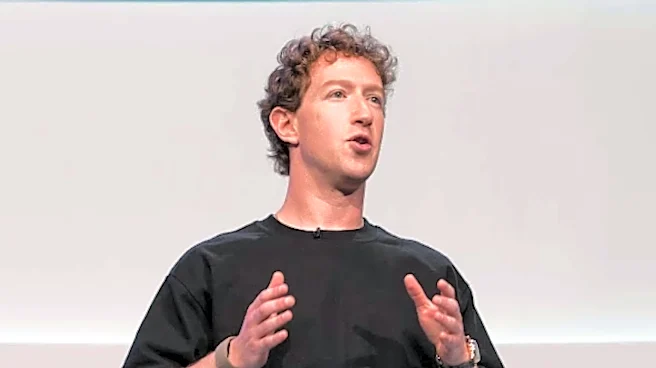
Meta CEO Mark Zuckerberg has released a comprehensive essay titled 'The Future is for Everyone,' detailing his vision for the development and regulation of artificial intelligence. The manifesto emphasizes the importance of public access to superintelligent
AI and positions Meta as a leader in this field. Zuckerberg advocates for sustainable infrastructure development, open AI access, and less restrictive government oversight, while also calling for collaboration with the government on cybersecurity. The essay outlines Meta's plans to support local communities and provide training and jobs in areas where it builds data centers.
Why It's Important?
Zuckerberg's manifesto highlights the growing influence of AI in society and the economy, with Meta positioning itself as a key player in shaping the future of this technology. The emphasis on open access and sustainable development could drive innovation and democratize AI benefits, potentially transforming industries and creating new economic opportunities. However, the call for less government oversight may raise concerns about accountability and ethical considerations in AI deployment.
What's Next?
Meta's initiatives could lead to increased investment in AI research and development, with potential collaborations between tech companies and governments to enhance cybersecurity and infrastructure. The manifesto may influence policy discussions on AI regulation and data privacy, as stakeholders evaluate the balance between innovation and oversight. The tech industry and policymakers will likely scrutinize Meta's actions to ensure they align with the principles outlined in the manifesto.
Beyond the Headlines
The manifesto raises questions about the ethical implications of AI and the role of tech giants in shaping societal norms. It highlights the need for a global dialogue on AI governance, addressing issues such as data privacy, algorithmic bias, and the impact on employment. The vision of widespread AI access could redefine personal and professional interactions, prompting discussions on the future of work and human-AI collaboration.