








What's Happening?
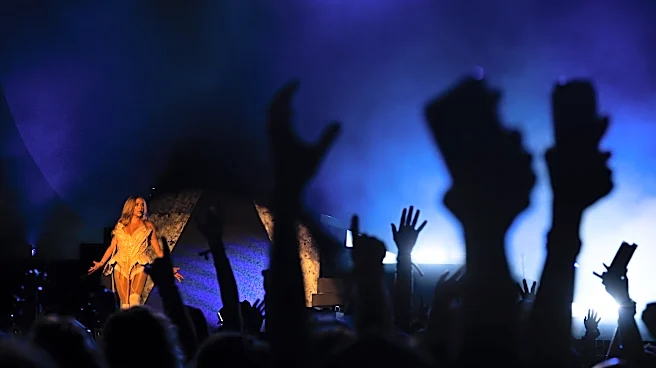
Siena Soltis' play 'Sugar Tub' recently premiered at Art/Space 114 in Downtown L.A., directed by Roxanne Rogers with choreography by Mamie Green of Volta Collective. The production, set in the industrial underbelly of the gallery, uses a stark concrete
pit to represent a 'tub' where aspiring models Venti, Trenta, and Grande await a call from an unseen industry representative named Franklin. The play critiques contemporary hustle culture and the punishing standards of feminine desirability within the commercial beauty industry. The five-actress ensemble, including Victoria Davidoff, Kayla Dobbs, Greer Cohen, Olivia Fogel, and Sadie Parker, performs restless movements and tap-dance sequences that illustrate a descent from performance into self-exploitation. The narrative explores themes of validation, self-optimization, and the psychological captivity experienced by individuals striving for success in a demanding industry. The audience is positioned above the 'tub,' becoming complicit observers in the characters' struggle.
Why It's Important?
The play 'Sugar Tub' offers a critical commentary on the pervasive influence of hustle culture and unrealistic beauty standards in American society. It highlights the psychological toll and self-exploitation that individuals, particularly women, endure in pursuit of validation and professional success within industries like modeling. The production's setting and audience arrangement underscore the panoptic nature of modern societal pressures, where individuals constantly feel under scrutiny and are compelled to perform for unseen authorities. This artistic exploration is important as it prompts reflection on the broader societal implications of late capitalism, where personal worth can become intertwined with marketability and external approval. The play suggests that the relentless pursuit of an 'ideal' self, often fueled by social media and commercial interests, can lead to a profound sense of alienation and a loss of genuine agency, impacting mental health and self-perception across various demographics.
What's Next?
While the immediate run of 'Sugar Tub' at Art/Space 114 has concluded, the themes it addresses are ongoing and deeply embedded in contemporary U.S. culture. The play's critical reception and its exploration of hustle culture, beauty standards, and self-exploitation may inspire further discussions and artistic interpretations. The issues raised are likely to continue to be subjects of public discourse, academic study, and artistic expression as society grapples with the long-term effects of these pressures. The play's success could lead to future stagings, adaptations, or influence other artists and playwrights to delve into similar societal critiques. The support from Getty through its Getty Marrow Undergraduate Arts Internship for this project also suggests a continued investment in fostering artistic works that engage with relevant social issues.
Beyond the Headlines
Beyond its immediate theatrical context, 'Sugar Tub' delves into the ethical and psychological dimensions of self-worth in a performance-driven society. The play subtly critiques the neoliberal fiction that individual will can overcome structural domination, arguing that even perceived freedom can be dictated by external terms. The characters' desperate attempts to perform 'carelessness' and 'beauty' for an unseen judge highlight the insidious nature of internalized surveillance and the constant pressure to maintain a flawless facade. This extends beyond the beauty industry to various aspects of modern life, where individuals are often compelled to curate their identities for public consumption. The play's anticapitalist logic suggests that the 'freedom' to leave a toxic environment means little if the terms of that freedom are still authored by the very system one is trying to escape, leading to a profound sense of entrapment and disillusionment.