



What's Happening?
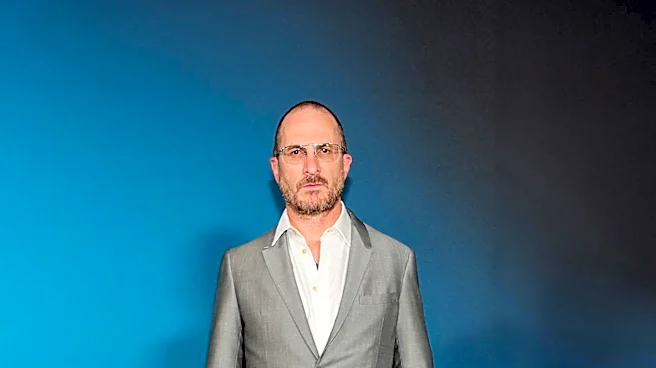
Darren Aronofsky, known for films like 'Black Swan' and 'The Whale,' is set to experiment with Artificial Intelligence (AI) in his upcoming film, according to his longtime cinematographer Matthew Libatique. Libatique, who has collaborated with Aronofsky since
1993, confirmed that they are conducting AI tests before shooting their next feature. Aronofsky has been a vocal advocate for AI in filmmaking, having previously produced AI-driven shorts like 'Ancestra' and 'Goodnight, Lamby,' and launched his AI studio Primordial Soup in partnership with Google DeepMind. Despite this, Libatique emphasizes that AI will not replace Aronofsky's hands-on directing style, but rather be used as a tool to explore new possibilities. Aronofsky has several potential projects in development, including an untitled erotic thriller with Gillian Flynn, a 'Cujo' remake for Netflix, and the Dwayne Johnson thriller 'Breakthrough' for A24.
Why It's Important?
This development signals a growing trend of established filmmakers integrating AI into their creative processes, potentially reshaping the future of cinema. Aronofsky's exploration of AI, particularly through his partnership with Google DeepMind, could set precedents for how the technology is adopted in mainstream productions. While Libatique believes AI won't replace human creativity, he suggests it could significantly impact the visual effects industry, particularly for large-scale productions like those from Marvel, by reducing costs. This could lead to a shift in how visual effects are produced, potentially affecting jobs in the post-production sector. The ethical implications of AI's use in generating content and its potential impact on creative ownership, as highlighted by Libatique's concerns about AI mimicking his style, also become more prominent as the technology advances.
What's Next?
Aronofsky and Libatique are currently conducting tests to understand the capabilities of AI in their filmmaking process. The specific project for which AI will be utilized has not been definitively announced, as Aronofsky has several films in various stages of development. The outcomes of these tests and the eventual application of AI in their next feature will likely be closely watched by the film industry. This experimentation could influence other directors and studios to further explore AI's potential, leading to more widespread adoption or, conversely, highlighting its limitations. The ongoing debate about AI's role in job displacement within the film industry, particularly in visual effects, is also expected to continue as the technology becomes more integrated.
Beyond the Headlines
The integration of AI into filmmaking raises profound questions about the nature of creativity and authorship. While Libatique asserts that AI won't replace human actors or the core creative vision, its ability to generate visual elements or even mimic artistic styles challenges traditional notions of artistic originality. The concern about AI pulling references and potentially infringing on creative copyright, as expressed by Libatique regarding AI mimicking his cinematography style, points to a looming legal and ethical battleground. Furthermore, the potential for AI to homogenize visual aesthetics, as Libatique fears with the 'Temu David Fincher' effect, could lead to a less diverse and more predictable cinematic landscape. This push towards AI in filmmaking is not just a technological shift but a cultural one, forcing a re-evaluation of what constitutes art and who owns it.