







What's Happening?
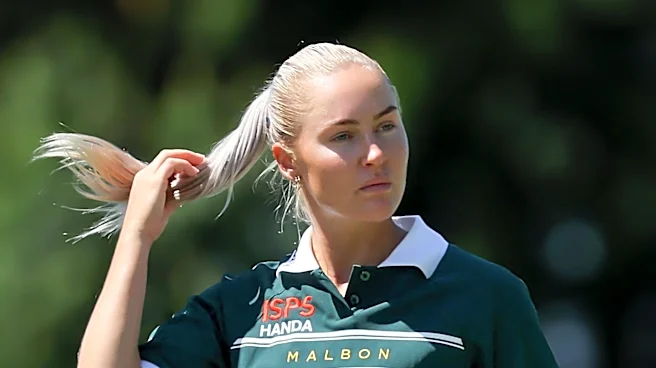
Professional golfer Charley Hull has publicly defended actress Sydney Sweeney against criticism regarding her revealing advertisements for the sports betting platform Novig. Sweeney has faced backlash, particularly from some female athletes and public figures,
who argue that the campaign sexualizes women in sports. Hull, however, stated that Sweeney was simply performing her job as a model and that the advertisement does not claim to represent female athletes. She questioned the inconsistency of critics who object to Sweeney's photos while sharing their own bikini pictures on social media. Hull emphasized that an advertisement featuring an attractive woman does not necessarily need to be interpreted as a broader cultural controversy, suggesting it can simply be viewed as a marketing campaign. She also highlighted Sweeney's reported ownership stake in Novig, indicating a business interest beyond just modeling.
Why It's Important?
This debate highlights a significant cultural tension regarding the representation of women in sports marketing and the broader entertainment industry. The controversy surrounding Sydney Sweeney's Novig advertisements brings to the forefront discussions about objectification, artistic freedom, and the responsibilities of public figures. For the U.S. sports industry, it raises questions about advertising standards, particularly during family-friendly broadcasts, as evidenced by baseball player Alex Call's call to remove such ads from postseason games. The differing opinions between Hull and other athletes underscore a divide on how women should present themselves professionally and personally, and whether a model's work can be separated from its perceived impact on societal views of women in sports. This discussion impacts how brands approach marketing, potentially influencing future advertising campaigns and the types of endorsements celebrities pursue.
What's Next?
The ongoing debate surrounding Sydney Sweeney's Novig advertisements is likely to continue, prompting further discussion among athletes, media personalities, and the public. Brands and advertising agencies may face increased scrutiny regarding the content and placement of their campaigns, especially those featuring celebrities and targeting broad audiences. This could lead to a reevaluation of advertising guidelines, particularly in sports broadcasting, to balance creative expression with public sensitivities and family viewing standards. Celebrities and their representatives might also become more cautious in selecting endorsement deals, considering potential backlash and its impact on their public image. The conversation may also encourage more athletes to voice their opinions on how women are portrayed in media, potentially influencing advocacy efforts for more equitable and respectful representation in sports and entertainment.
Beyond the Headlines
The controversy surrounding Sydney Sweeney's Novig ad delves into deeper societal questions about gender, autonomy, and the commodification of the female body in media. Beyond the immediate debate, it touches upon the ethical considerations of advertising, particularly when it intersects with sports, an arena often seen as promoting athleticism and healthy competition. The differing viewpoints highlight a generational and ideological gap in how female sexuality and professional roles are perceived. Is a woman's choice to pose provocatively an act of empowerment, or does it inadvertently reinforce harmful stereotypes? This discussion has long-term implications for cultural norms, potentially influencing how future generations view women's roles in both entertainment and sports. It also challenges the media to consider its responsibility in shaping public perception and the potential impact of its content on societal values and gender equality.