




What's Happening?
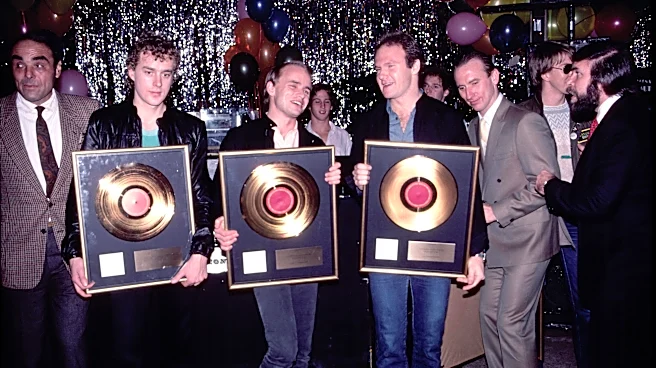
Stewart Copeland, drummer for the iconic band The Police, openly discussed his past frustrations with bandmate Sting. In 2023, Copeland confessed to feeling a strong urge to "choke the life out of" Sting on multiple occasions due to what he perceived
as Sting's "desire to be dictatorial." This candid reflection sheds light on the internal dynamics and creative clashes that characterized the band's history. Copeland's remarks highlight the significant personal and artistic tensions that existed within The Police, suggesting that these conflicts were a major factor in the band's eventual inability to continue. His comments provide a rare glimpse into the often-strained relationships among highly creative individuals in successful music groups.
Why It's Important?
This revelation is important for understanding the complex interpersonal dynamics that can impact the longevity and creative output of highly successful musical acts. For fans of The Police, it offers a deeper, more nuanced perspective on the band's history, moving beyond their public image to reveal the underlying struggles. For the music industry, it serves as a reminder that creative differences and personality clashes are common, even among legendary artists, and can significantly influence a group's trajectory. The insights from Copeland underscore how individual artistic visions, when clashing, can lead to both groundbreaking music and insurmountable internal friction, ultimately affecting the band's ability to sustain itself.
Beyond the Headlines
Copeland's comments extend beyond mere band anecdotes, touching upon the broader psychological and professional challenges faced by artists in collaborative environments. The concept of a 'dictatorial' creative leader, while potentially driving artistic vision, can also foster resentment and stifle collaboration, leading to an unsustainable working relationship. This dynamic is not unique to music but is prevalent in various creative industries where strong personalities and differing artistic approaches converge. The long-term impact of such internal conflicts can shape an artist's subsequent career choices and their approach to future collaborations, influencing the landscape of popular music and artistic production for decades.