




What's Happening?
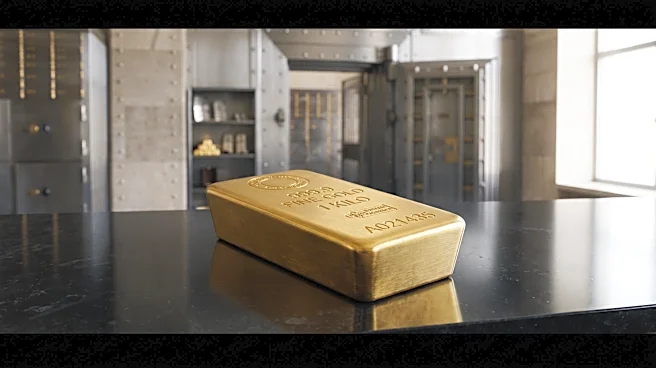
Gold prices have significantly declined, reaching a 14-month low on November 19, 2026. The precious metal has lost approximately 34 percent of its value since its record high of $5,589.38 per ounce on January 28. Gold futures opened at $3,730.30 per troy
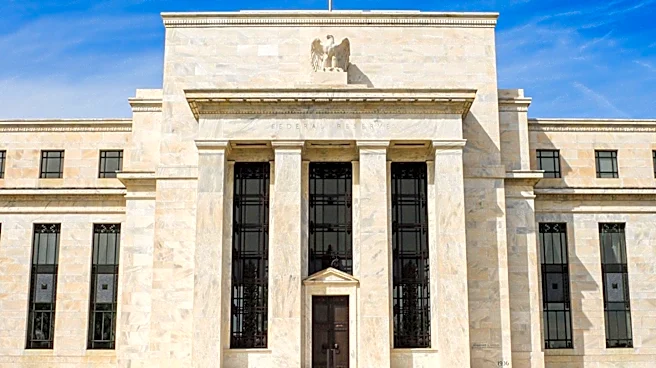
ounce, down 3.2% from the previous day's open, and further slipped to $3,722.40 by 7:15 a.m. ET. This downturn is primarily attributed to a strengthening US dollar, which makes gold more expensive for international buyers, and growing expectations of further interest rate hikes by the Federal Reserve. Federal Reserve governor Chris Waller indicated that policymakers are considering additional rate increases to bring inflation back to its 2 percent target, with discussions around 25 or 50 basis point hikes in December and January.
Why It's Important?
The sharp decline in gold prices has significant implications for investors and the broader U.S. economy. A stronger US dollar, driven by anticipated Federal Reserve rate hikes, typically makes dollar-denominated assets like gold less attractive. This trend suggests that the Federal Reserve's hawkish stance on monetary policy is gaining traction, aiming to curb inflation. For investors, the decreased value of gold could lead to portfolio rebalancing, potentially shifting investments towards assets that benefit from higher interest rates, such as bonds or interest-bearing accounts. The gold market's sensitivity to Federal Reserve policy underscores the central bank's influence on commodity markets and investor sentiment, impacting those who view gold as a safe-haven asset or an inflation hedge.
What's Next?
Market participants are closely watching the Federal Reserve's upcoming policy decisions, particularly the December meeting, where a rate increase is widely anticipated. Federal Reserve governor Chris Waller's comments suggest that further hikes are likely, which could continue to exert downward pressure on gold prices. While some analysts remain bullish on gold in the long term, citing rising government debt and money supply as potential support for prices, the immediate outlook is tied to the Federal Reserve's actions. The market is pricing in a rate increase before the end of the year, indicating that gold prices are expected to remain near current levels or potentially shed additional value. The Federal Reserve's commitment to bringing inflation down to 2 percent will be a key determinant of gold's trajectory in the coming months.
Beyond the Headlines
The current gold market dynamics highlight a broader economic narrative where the fight against inflation takes precedence, even at the cost of traditional safe-haven assets. The Federal Reserve's aggressive stance, coupled with a robust US dollar, reflects a strategic pivot to stabilize the economy. This situation could lead to a re-evaluation of investment strategies, with a potential shift away from commodities like gold towards assets that offer yield in a rising interest rate environment. The long-term implications could include a recalibration of global currency valuations and a renewed focus on fiscal discipline, as central banks worldwide grapple with similar inflationary pressures. The interplay between monetary policy, currency strength, and commodity prices will continue to shape the investment landscape.