






What's Happening?
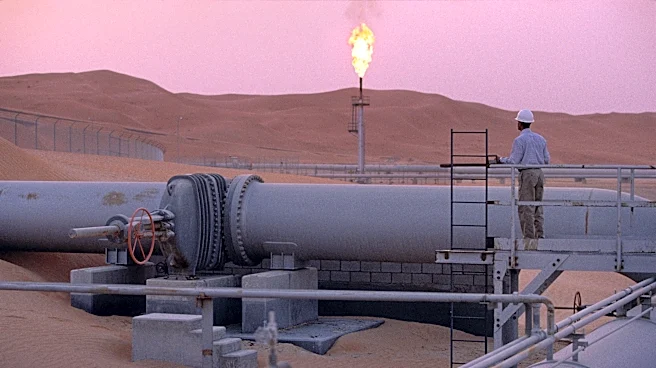
The Bureau of Land Management (BLM) has commenced an environmental review for the proposed 887-mile Western Gateway Fuel Pipeline. This pipeline project aims to transport refined liquid petroleum products, including gasoline and diesel, from Borger, Texas,
to Buckeye, Arizona. The pipeline is designed to deliver oil products from the mid-continent and Gulf Coast regions. The proposed route will enter Arizona from New Mexico along Interstate 10, then proceed north of Tucson, through Casa Grande, and finally reach Buckeye. The project also includes the construction of supporting infrastructure such as access roads and pump stations. The BLM is currently in the scoping process for an Environmental Impact Statement (EIS) and has opened a 30-day public comment period. Additionally, two virtual community meetings are scheduled for early December to gather public input on the project.
Why It's Important?
This proposed pipeline is significant for U.S. energy infrastructure, as it seeks to enhance the distribution of refined petroleum products across the Southwest. By connecting the mid-continent and Gulf Coast regions to Arizona, the Western Gateway Fuel Pipeline could improve fuel supply reliability and potentially stabilize prices in the affected areas. The project's integration with existing pipelines, such as the Gold Pipeline, which runs from Borger, Texas, to St. Louis, Missouri, suggests a broader strategy to create a more extensive and interconnected fuel transportation network. This expansion could benefit consumers and industries reliant on these products in Arizona and surrounding states. However, the environmental review process is crucial, as it will assess the potential impacts of construction and operation on natural resources, local communities, and ecosystems, balancing economic benefits with environmental protection concerns.
What's Next?
The immediate next steps involve the continuation of the public comment period, which will close in 30 days, and the scheduled virtual community meetings in early December. These public engagement efforts are critical for gathering diverse perspectives and concerns that will inform the Environmental Impact Statement (EIS). Following the scoping process, the BLM will analyze all submitted comments and data to prepare a draft EIS. This draft will then be released for further public and agency review before a final decision is made on the pipeline's approval. The project's progression will depend heavily on the findings of the environmental review and the BLM's ability to address any significant environmental or community concerns raised during the process.
Beyond the Headlines
The development of new pipeline infrastructure like the Western Gateway Fuel Pipeline highlights ongoing debates surrounding energy policy, economic development, and environmental conservation in the U.S. While proponents emphasize energy security and economic growth through job creation and reliable fuel supply, environmental groups and local communities often raise concerns about potential ecological damage, land use impacts, and the long-term implications of fossil fuel infrastructure. The rigorous environmental review process, including public participation, serves as a critical mechanism for mediating these competing interests. The outcome of this review could set precedents for future energy projects, influencing how the U.S. balances its energy needs with its environmental commitments and community well-being.