




What's Happening?
The U.S. government has implemented a 100% tariff on certain imported patented pharmaceutical products and their ingredients, as outlined in an April 2026 Section 232 proclamation. This measure, stemming from a Commerce Department national security investigation,
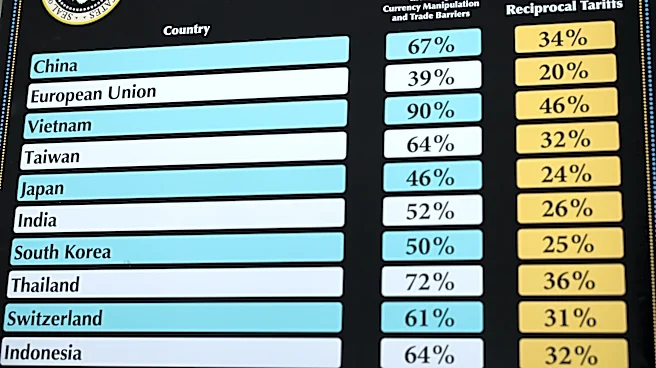
applies to specific tariff codes and includes active pharmaceutical ingredients (APIs) and key starting materials. While the default tariff is 100%, goods from the European Union, Japan, South Korea, and Switzerland face a 15% tariff. Companies with approved plans to move production to the U.S. pay 20%, a rate set to increase to 100% by April 2, 2030. Generic drugs, biosimilars, and U.S.-origin products are exempt. In a significant update, a new tariff heading (9903.04.70) was created in September, allowing a 0% additional duty for pharmaceutical articles and ingredients imported solely for clinical trials, research and development, or other non-commercial use. This research exemption requires rigorous documentation to prove the material's intended use, as customs officials will not accept 'research use only' labels without supporting records.
Why It's Important?
This tariff structure aims to bolster U.S. national security by encouraging domestic pharmaceutical production and reducing reliance on foreign supply chains for patented medicines. The high default tariff could significantly increase the cost of imported patented drugs, potentially impacting pharmaceutical companies and, indirectly, consumers. However, the 0% tariff for research materials is crucial for American research labs, universities, and contract labs, as it prevents increased costs from hindering drug discovery and development. The stringent documentation requirements for this exemption place a new burden on importers, requiring them to maintain detailed records of material use and origin. This could lead to increased administrative overhead and potential delays if documentation is insufficient. The policy also signals a broader effort by the U.S. government to reshore drug development and manufacturing, which could lead to long-term shifts in the global pharmaceutical supply chain.
What's Next?
The Commerce Department has until early April 2027 to determine whether generic drugs and their ingredients should also be subjected to these tariffs, a decision that would have a far-reaching impact given that generics account for approximately nine out of ten U.S. prescriptions. Companies currently benefiting from the 20% onshoring discount face a deadline of April 2030 to establish domestic production before the full 100% tariff applies. Additionally, the U.S. Customs and Border Protection (CBP) will clarify how strictly it interprets the 'solely' clause for research exemptions through future rulings, audits, and potentially rejected entries. Importers of research materials are advised to proactively obtain origin and lot documentation from suppliers to ensure compliance. The White House has also indicated that Section 232 reviews are underway for other medical sectors, including personal protective equipment, medical consumables, and medical equipment, suggesting potential future tariffs in these areas.
Beyond the Headlines
The implementation of these tariffs reflects a strategic pivot towards economic nationalism within the pharmaceutical sector, driven by national security concerns. While the immediate goal is to secure the drug supply chain, the long-term implications could include a restructuring of global pharmaceutical R&D and manufacturing footprints. The emphasis on documentation for research exemptions highlights a broader trend of increased scrutiny on international trade flows, pushing companies to enhance transparency and traceability within their supply chains. This policy could also inadvertently foster innovation in domestic manufacturing processes as companies seek to qualify for lower tariff rates. Furthermore, the potential inclusion of generics in future tariffs could fundamentally alter the accessibility and affordability of a vast majority of prescription drugs in the U.S., prompting significant debate among healthcare providers, insurers, and patient advocacy groups regarding the balance between national security and public health access.