
What's Happening?
Interior designers are increasingly advising homeowners to move away from fast-paced, trend-driven decor and instead allow their homes to evolve over time, reflecting personal style, memories, and how
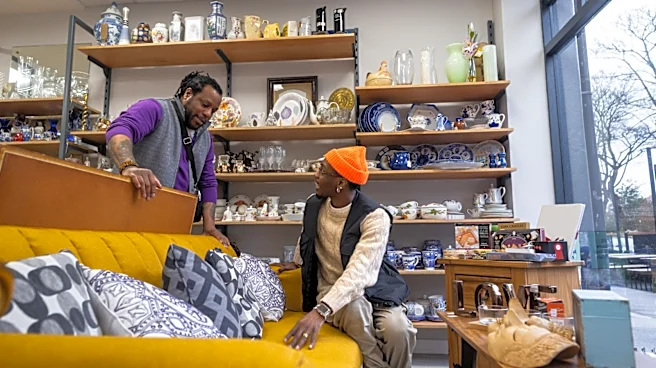
they actually live. Kelly Trotz, a senior designer at Drury Design Kitchen & Bath Studio, and Laetitia Laurent, founder and principal designer at Laure Nell Interiors, emphasize that authentic homes are built on personal stories, hobbies, and heritage, rather than mass-produced, 'cookie-cutter' items. They suggest incorporating pieces with personal meaning, such as art collected during travels or inherited items, to create depth and individuality. The approach encourages a slower, more thoughtful curation process, where spaces are designed for comfort, scale, and flow, supporting daily routines and personal happiness rather than just visual aesthetics.
Why It's Important?
This shift in design philosophy has significant implications for the U.S. homeware and interior design industries. It challenges the rapid consumption model often fueled by social media trends and mass-market retailers, potentially leading to a greater demand for durable, high-quality, and unique pieces. For consumers, embracing this approach can result in more meaningful and sustainable living spaces, reducing the need for frequent redecorating and minimizing waste. It also empowers individuals to express their identity through their homes, fostering a stronger sense of belonging and comfort. Businesses that adapt by offering customizable options, artisanal products, and pieces with lasting value, rather than just trendy items, stand to gain. Conversely, companies heavily reliant on fast fashion-like cycles in home decor may face challenges as consumers prioritize longevity and personal connection over fleeting styles.
What's Next?
The trend towards personalized and evolving home decor is likely to continue gaining momentum. Consumers may increasingly seek out designers who specialize in creating bespoke and narrative-driven interiors. There could be a rise in demand for vintage, antique, and handcrafted items, as well as services for custom furniture and art. Educational content focusing on developing personal style, understanding spatial dynamics, and making sustainable choices in home furnishing will become more valuable. Retailers might respond by offering curated collections that emphasize craftsmanship and timeless design, alongside options for personalization. The focus will shift from simply selling products to providing solutions that help individuals create authentic and enduring living environments that truly reflect their lives and stories.
Beyond the Headlines
This movement towards personal and evolving home decor touches upon deeper societal values related to authenticity, sustainability, and the rejection of consumerism's more superficial aspects. It suggests a growing desire for permanence and meaning in an increasingly transient world. Ethically, it promotes a more responsible approach to consumption, encouraging investment in items that are built to last and hold sentimental value, thereby reducing environmental impact. Culturally, it fosters a greater appreciation for individual expression and storytelling within the domestic sphere, transforming homes into living archives of personal journeys rather than mere showcases of current trends. This philosophical shift could also influence architectural design, favoring adaptable spaces that can accommodate changing needs and styles over time, further integrating the concept of a 'forever home' that grows with its inhabitants.