





What's Happening?
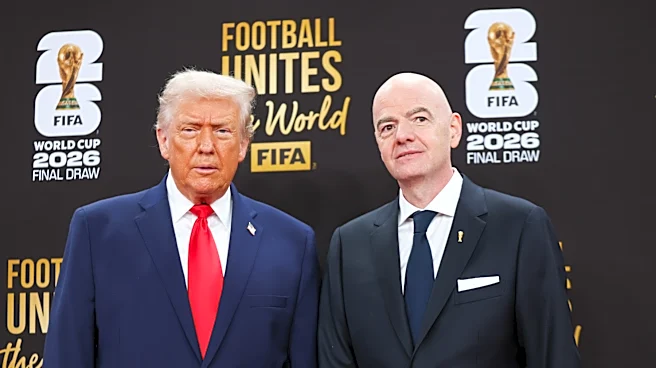
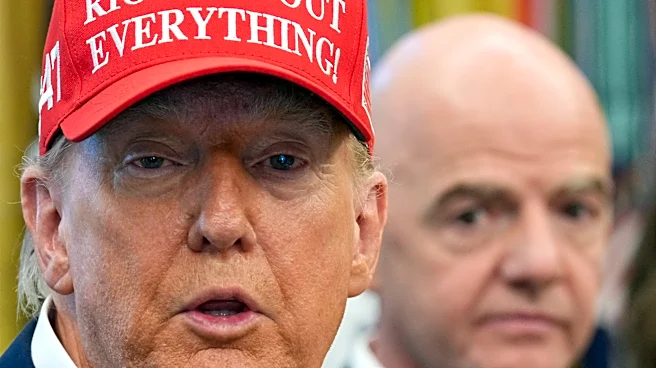
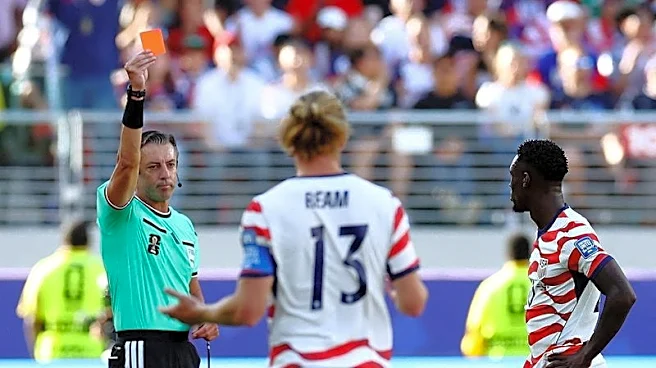
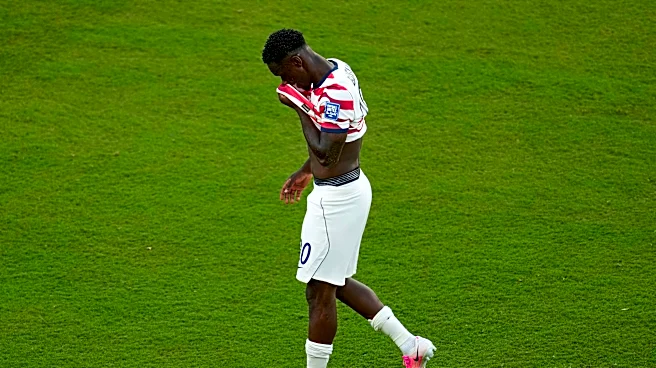
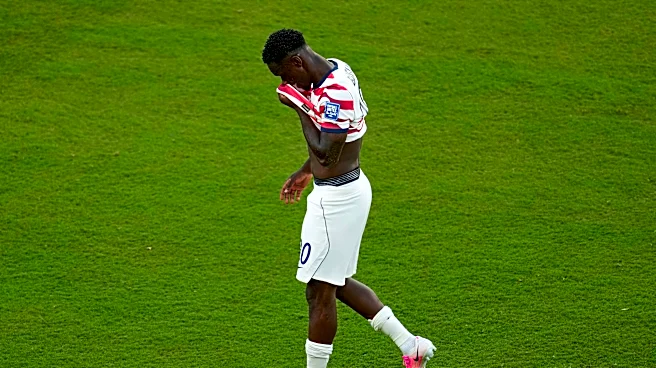
FIFA's decision to allow U.S. striker Folarin Balogun to play in a World Cup match despite receiving a red card has sparked controversy and raised questions about the organization's independence. President Trump reportedly intervened with FIFA President Gianni
Infantino, leading to the lifting of Balogun's suspension. This move has been criticized as an example of political interference undermining the integrity of FIFA's rules. UEFA condemned the decision, and Belgium challenged the ruling. The incident highlights concerns about the influence of political pressure on international institutions and their ability to uphold rules impartially.
Why It's Important?
The controversy surrounding FIFA's decision underscores the broader issue of institutional independence in the face of political pressure. Institutions like FIFA are expected to operate based on established rules and principles, but this incident suggests that political influence can override these standards. This has implications for the credibility and legitimacy of not only FIFA but also other international organizations that may face similar pressures. The situation reflects a growing trend where institutions are seen as tools for political objectives rather than independent entities, raising concerns about their ability to function effectively and fairly.