





What's Happening?
Gen Z and millennials are projected to account for half of all holiday spending, marking a significant shift in consumer demographics for the season. This demographic, while planning double-digit increases in spending, is also exhibiting a strong trend
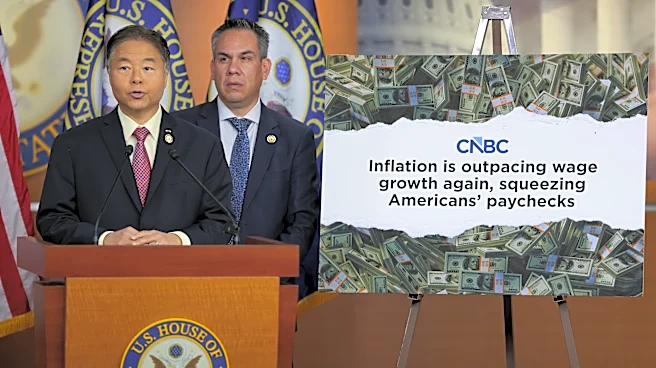
of 'trading down,' meaning they are increasingly opting for value-tier merchants and seeking promotions. According to Bank of America card data, American shoppers are hunting for cheaper stores at the highest rate since early 2021, and millennials, in particular, have been trading down faster than Gen X or baby boomers since 2022, especially in apparel and groceries. This behavior suggests a heightened sensitivity to rising costs, leading many consumers to change where and how they spend rather than reducing overall expenditure. Deloitte classifies 38% of shoppers as 'holiday value seekers' who anticipate spending 12% more than other shoppers, indicating that seeking deals does not necessarily equate to spending less.
Why It's Important?
This trend is important because it highlights a significant shift in consumer behavior driven by younger generations, impacting retail strategies across the U.S. The increased focus on value and promotions by Gen Z and millennials means that retailers must adapt their pricing, marketing, and product offerings to attract these key demographics. Industries such as apparel and groceries are particularly affected, as consumers are deferring purchases or opting for lower-cost alternatives. While overall holiday spending is expected to grow, a substantial portion of this growth is attributed to higher prices rather than increased volume, as forecasted by Mastercard SpendingPulse. This indicates a challenging environment for businesses, where maintaining sales figures might require navigating inflationary pressures and a consumer base increasingly focused on affordability. The disparity in spending power, with higher-income households planning significantly more expenditure, also underscores growing economic stratification.
What's Next?
Retailers are likely to intensify their focus on promotions, discounts, and value-oriented product lines to capture the spending power of Gen Z and millennials. The emphasis on 'trading down' suggests that brands may need to re-evaluate their pricing strategies and potentially introduce more budget-friendly options. As the holiday season progresses, the success of retailers will largely depend on their ability to cater to these value-seeking consumers. Economic factors such as inflation, gas prices, and wage growth will continue to influence consumer confidence and spending patterns. Goldman Sachs anticipates spending to hold up, with growth projected for 2026 and 2027, partly due to a resilient consumer and expected improvements in real disposable income as price pressures from tariffs, energy, and AI-related costs potentially fade. However, the impact of the stock market on wealth effect and spending will also be a factor to watch.
Beyond the Headlines
The 'trading down' phenomenon reflects broader economic anxieties and a generational shift in financial prudence. While Gen Z and millennials are poised to drive holiday spending, their approach is characterized by a pragmatic search for value, potentially reshaping long-term consumer habits. This could lead to a more permanent shift towards secondhand markets, upcycling, and a general preference for durability and affordability over brand prestige. The increased sensitivity to costs among younger generations, even as they report better household finances, suggests a learned behavior from navigating an economy marked by inflation and economic uncertainty. This could also foster innovation in retail, pushing companies to develop more sustainable and cost-effective production methods to meet the demands of a value-conscious consumer base. The trend also highlights the growing influence of economic conditions on purchasing decisions, even for discretionary spending during holidays.