





What's Happening?
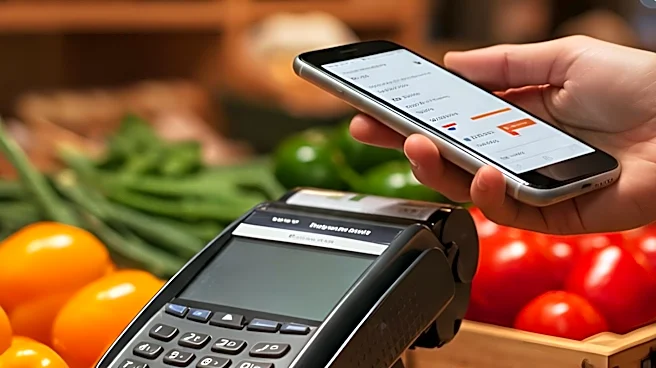
Near-field communication (NFC) payments, commonly known as tap-to-pay, are rapidly changing how consumers make purchases across the United States. This technology allows devices to exchange data when in close proximity, enabling quick and secure transactions
by tapping a card, phone, or smartwatch at a payment terminal. NFC payments are now widely accepted in various sectors, including retail stores, restaurants, cafes, and public transportation systems. The core benefits driving this adoption are speed, convenience, and improved security. Transactions are completed in seconds without the need for swiping or inserting cards. Security is enhanced through tokenization and encryption, which prevent merchants from receiving actual card details, and many mobile wallets add an extra layer of protection with biometric verification. For businesses, NFC payments reduce the need for cash handling, simplifying operations and lowering the risk of errors.
Why It's Important?
The increasing prevalence of NFC payments signifies a major evolution in the U.S. payment landscape, impacting both consumers and businesses. For consumers, it offers a faster, more convenient, and secure way to pay, improving the overall shopping experience, especially in busy environments. This convenience can lead to higher customer satisfaction and repeat business for merchants. For businesses, particularly in retail and food service, NFC payments streamline checkout processes, reduce wait times, and enhance operational efficiency by minimizing cash management. The security features, such as tokenization and encryption, are crucial in an era of rising cyber threats, protecting sensitive customer data and reducing fraud risks. This shift also pushes businesses to upgrade their payment infrastructure, fostering technological advancement and competitiveness within various industries. The reduced reliance on cash also has implications for financial management and security for businesses.
What's Next?
NFC payments are expected to continue their rapid growth and become an even more integral part of daily commerce in the U.S. As consumer comfort with tap-to-pay increases, it is likely to become the default payment method in many settings. The technology will continue to evolve alongside mobile wallets, wearables, and digital identity tools, offering even more integrated and seamless payment experiences. Businesses that have not yet adopted NFC payment terminals will face increasing pressure to do so to meet customer expectations and remain competitive. Further advancements in security protocols and user authentication methods are also anticipated. The expansion of NFC into new areas, such as loyalty programs and device pairing, will likely create more interconnected digital ecosystems. Both consumers and businesses will need to stay updated on best practices for device security and payment system maintenance to ensure continued protection.
Beyond the Headlines
The widespread adoption of NFC payments extends beyond mere transactional convenience; it represents a significant step towards a more digitized economy. This shift has broader implications for financial inclusion, as access to smartphones and digital payment methods becomes increasingly essential. While offering benefits, it also highlights the digital divide for those without access to such technology or banking services. The data generated from these transactions provides valuable insights into consumer behavior, raising important questions about data privacy, ownership, and ethical usage. Furthermore, the reduced physical interaction in transactions could subtly alter social dynamics in commercial settings. The continuous evolution of NFC technology also underscores the ongoing race between payment innovation and cybersecurity threats, demanding constant vigilance and adaptation from both technology providers and users. This technological progression is reshaping consumer habits and business models, pushing society further into a cashless future with both opportunities and challenges.