




What's Happening?
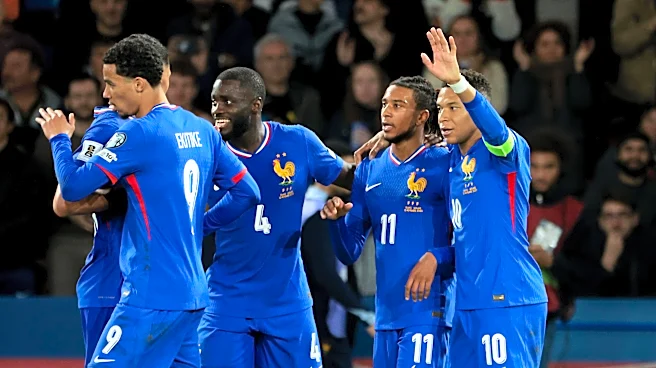
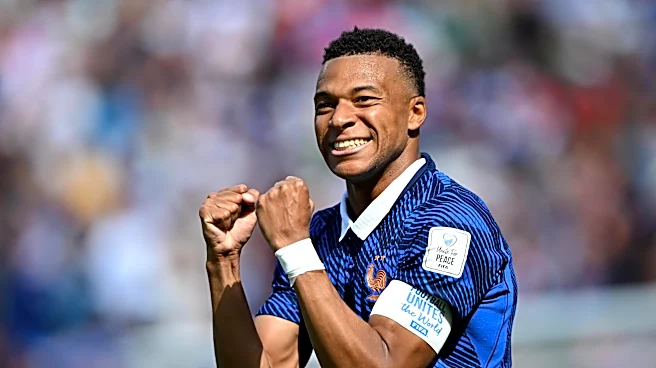
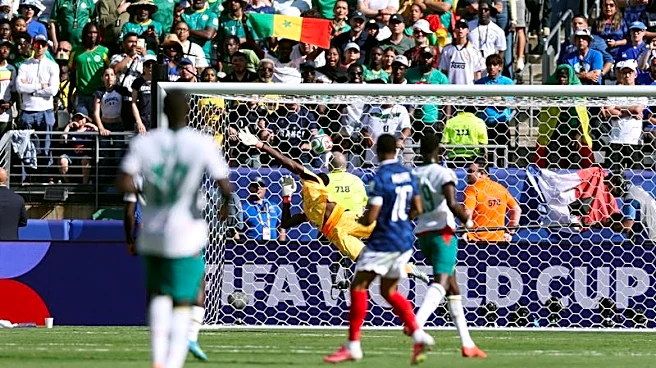
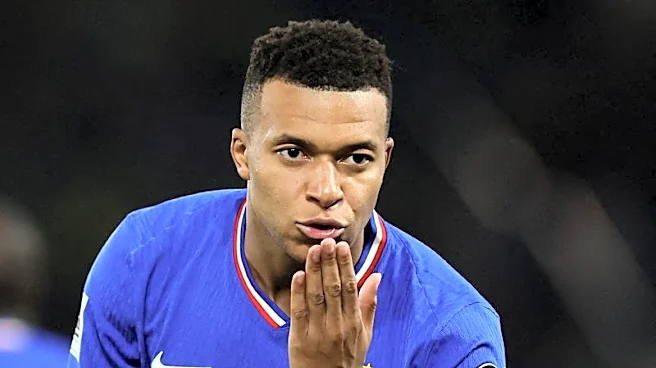
In a highly anticipated match at the 2026 FIFA World Cup, France defeated Senegal 3-1, showcasing their prowess on the field. The game, held on June 16, 2026, saw France's Kylian Mbappe break records by scoring two goals, bringing his total to 58 international
goals, surpassing Olivier Giroud's previous record. Despite Senegal's strong performance, particularly in the first half, they were unable to capitalize on their chances. France's tactical adjustments in the second half, including the impactful performance of Michael Olise, turned the tide in their favor. Senegal's Ibrahim Mbaye managed to score, but it was not enough to overcome France's lead.
Why It's Important?
This match highlights the competitive nature of the World Cup and the high level of talent present in both teams. For Senegal, this game was a testament to their growing strength in international football, despite the loss. The performance of players like Mbappe and Olise for France underscores the depth of talent in the French squad, positioning them as strong contenders for the World Cup title. The match also serves as a reminder of the unpredictable nature of football, where strategic changes and individual brilliance can significantly alter the outcome.
What's Next?
For Senegal, the focus will shift to analyzing their performance and preparing for future international competitions. The team has shown potential and will likely continue to develop their young talents. France, on the other hand, will advance further in the tournament, with their sights set on winning the World Cup. Their next matches will be crucial in maintaining their momentum and addressing any tactical weaknesses exposed during the game against Senegal.
Beyond the Headlines
The match between France and Senegal also reflects broader themes in international sports, such as the increasing competitiveness of African teams on the world stage. Senegal's performance, despite the loss, is indicative of the progress African nations are making in football, challenging traditional powerhouses. This development could lead to a more diverse and unpredictable World Cup landscape in the future.