




What's Happening?
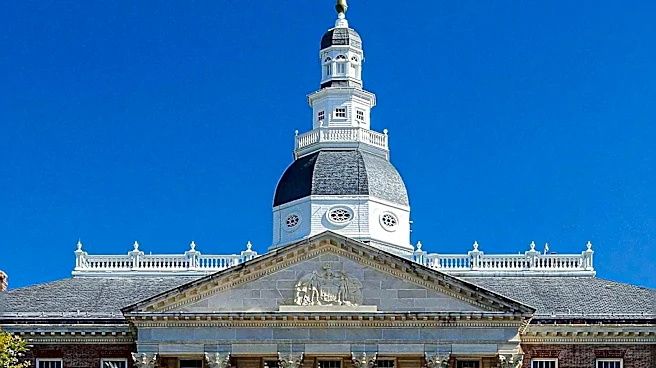
A new report from the Maryland Chamber Foundation, titled 'The Cost of Slow Growth,' indicates that Maryland's economy has grown at less than half the national rate over the past decade. Between 2016 and 2025, Maryland's economy grew by 11.6%, significantly
lower than the national average of 25.1%. This slower growth has potentially cost the state hundreds of billions of dollars in economic activity, with an estimated gap of nearly $53 billion in 2025 alone. The report also highlights that Maryland could have added approximately 163,000 more jobs if its employment growth matched the national rate. Furthermore, Maryland ranks 45th nationally in the projected rate of new business applications becoming businesses with employees, suggesting a challenge in generating new enterprises. The state also faces a population outflow, with nearly 108,000 more people moving out of Maryland than moving in between 2022 and 2025. These economic challenges coincide with projected structural budget deficits, estimated at $2.6 billion for the next fiscal year and potentially exceeding $3 billion by 2030.
Why It's Important?
The findings of this report are critical for Maryland's economic future and its residents. The persistent underperformance compared to the national average, coupled with significant budget deficits, could lead to difficult financial decisions for state lawmakers. Political analyst John Dedie suggests that tax and fee increases are likely when the legislature reconvenes, potentially including an increase in the sales tax from 6% to 7% and its expansion to services. Such measures could further burden residents and businesses, potentially discouraging investment and exacerbating the state's economic challenges. House Minority Leader Jason Buckel warned that additional corporate taxes could deter investment. The report also notes that Maryland is among the seven most expensive states to live and do business, with industrial electricity prices 23% above the national average in 2024, which could impact business competitiveness and job creation. The state's reliance on federal employment, which saw reductions and funding cuts under the President Trump administration, further underscores the need for economic diversification.
What's Next?
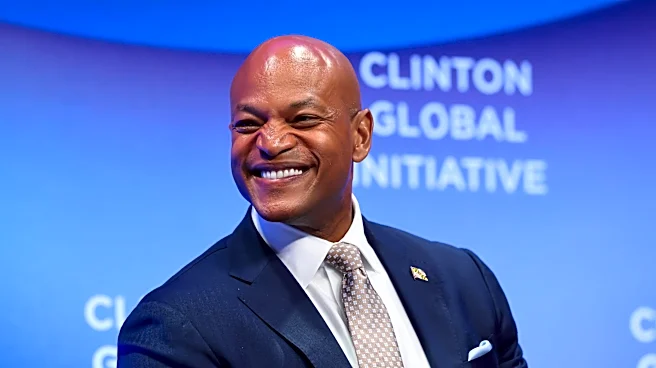
Maryland lawmakers are preparing for a challenging budget session, with Governor Wes Moore and Democratic legislative leaders announcing plans for a four-year budget strategy to address the projected deficits. However, specific details of this plan have not yet been released. House Minority Leader Jason Buckel supports the concept of long-term budget planning but questions the reliability of future revenue projections and notes that Republicans have not been included in the discussions. Lawmakers will likely face pressure to either implement significant tax increases, which some argue the economy and citizens cannot withstand, or to cut back on spending commitments, including the multibillion-dollar Blueprint for Maryland's Future education plan. The state administration, through Governor Moore's office, is actively working to diversify the economy and attract private investment, citing billions in private investment and the creation of over 64,000 businesses since early 2023. Major investments include a $3.7 billion shipbuilding project, a $2 billion expansion by AstraZeneca, and the planned Sphere National Harbor development, alongside targeting growth in quantum computing, aerospace, advanced manufacturing, and life sciences.
Beyond the Headlines
The report's findings suggest a deeper structural issue within Maryland's economy, moving beyond cyclical fluctuations to highlight a sustained period of slower growth. The comparison to a household living beyond its means, as described by political analyst John Dedie, underscores the severity of the fiscal situation. The potential for increased sales taxes and their expansion to services could represent a significant shift in the state's revenue generation strategy, impacting daily life for all Marylanders and potentially altering consumer behavior and business operations. The ongoing debate between tax increases and spending cuts, particularly concerning the Blueprint for Maryland's Future, reflects a fundamental tension between maintaining public services and fostering economic competitiveness. The state's efforts to diversify its economy away from federal dependence, while commendable, will require sustained strategic investment and a favorable business environment to overcome the current growth disparities and attract and retain both businesses and residents.