

What's Happening?
The Cleveland Guardians are set to increase their payroll for the 2027 MLB season and are actively exploring the market for starting pitching talent, according to reports from Zack Meisel of The Athletic and Jon Heyman of the New York Post. This move
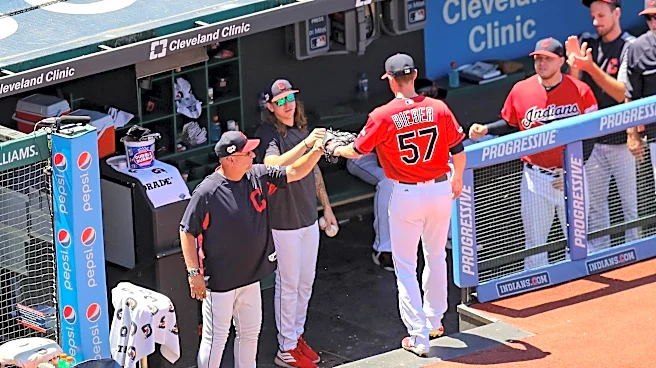
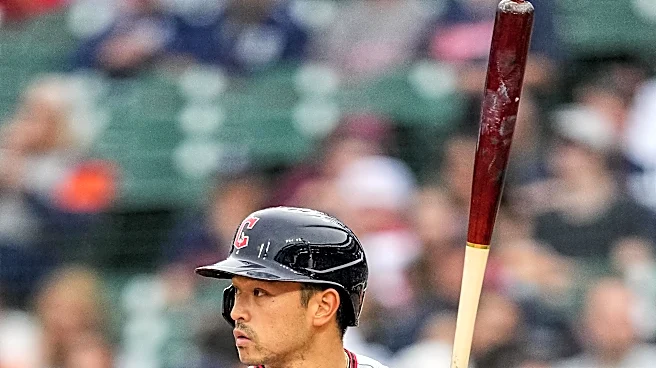
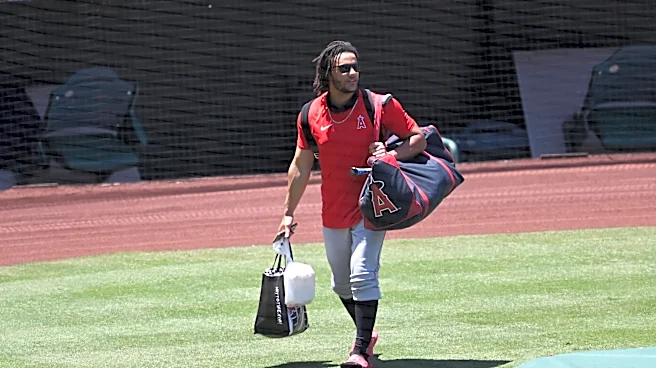
comes after the team opened the 2026 season with a payroll around $75 million, not fully accounting for deferred salaries or uncollected player salaries due to various issues. President of baseball operations Chris Antonetti confirmed the payroll increase, though a specific figure was not provided. A significant portion of this increase will be organic, driven by existing player contracts, such as Tanner Bibee's salary jump from $4 million to $7 million, and a substantial 13-player arbitration class. Key players like Steven Kwan, Gavin Williams, Cade Smith, Brayan Rocchio, and Jo Adell are projected to receive significant raises, with Kwan and Adell alone estimated to cost $20.9 million combined. The arbitration class as a whole is projected to cost $48.7 million, indicating a substantial rise in player expenses even before new acquisitions.
Why It's Important?
This payroll increase signals a potential shift in strategy for the Guardians, a team historically known for its conservative spending. A higher payroll could allow the team to retain key talent and compete more effectively in the free-agent market, addressing critical roster needs. The focus on acquiring starting pitching is particularly important given the departure of Foster Griffin and the team's reliance on exceptional health from its rotation in 2026, which is difficult to replicate. The Guardians' farm system, while typically strong in pitching development, has faced recent setbacks due to injuries to top prospects like Khal Stephen and Daniel Espino, creating a need for external rotation depth. Investing in starting pitching is crucial for sustained competitiveness, especially in a division where pitching depth can be a deciding factor. This move could also impact player retention, as the team has historically traded players as they approach the end of their club control window, but Antonetti has indicated an intent to keep players like Steven Kwan.
What's Next?
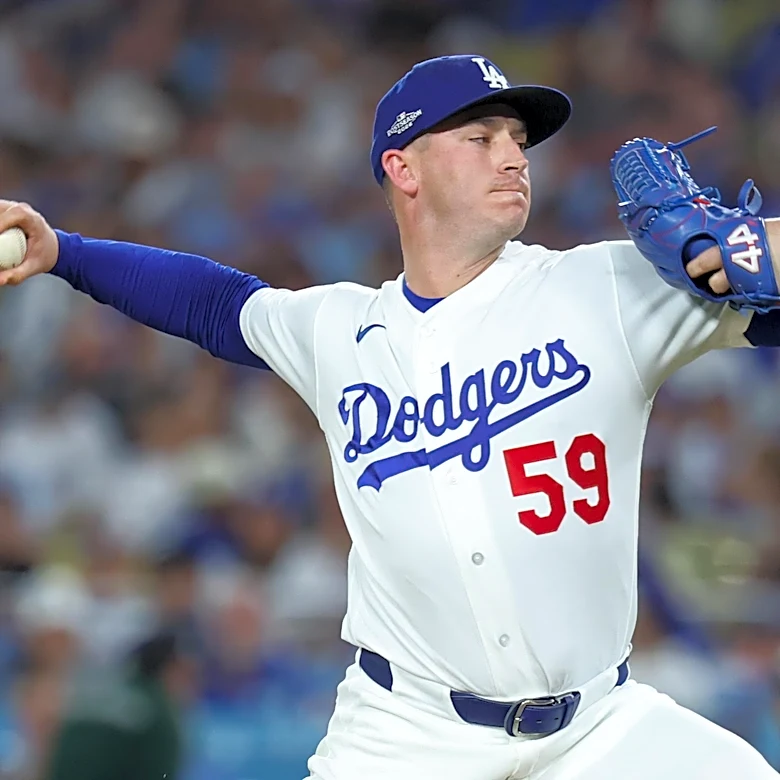
The Guardians are expected to actively pursue lower-cost veteran starters in the free-agent market and explore trade opportunities for lower-salaried pitchers. While a reunion with Foster Griffin is not ruled out, his projected multi-year, multi-million dollar contract may be prohibitive for Cleveland, given their historical reluctance to sign free-agent starters to multi-year deals. The team is also showing interest in cost-efficient relief help, with left-handed reliever Tim Hill being a potential target. Additionally, Cleveland may seek a right-handed bat for first base and designated hitter roles, with options like Paul Goldschmidt in the free-agent market or trade candidates such as Andrew Vaughn, Mark Vientos, or Jake Burger. The team will also need to manage its arbitration class, potentially non-tendering some lower-end players to manage costs, while integrating top prospect Ralphy Velazquez, who is expected to debut in 2027 and take on significant at-bats at first base.
Beyond the Headlines
The Guardians' decision to increase payroll could reflect a broader trend in MLB where even smaller-market teams are finding it necessary to invest more heavily in player salaries to remain competitive. This move might also be influenced by the team's recent success, including a division title in 2026, creating pressure to build on that momentum. The emphasis on acquiring pitching depth highlights the increasing understanding across the league that a healthy and deep rotation is paramount for a successful season, especially with the growing demands on pitchers. Furthermore, the team's approach to balancing organic payroll growth from arbitration-eligible players with strategic free-agent signings will be a key indicator of their long-term financial philosophy and commitment to contending. This could set a new precedent for how the Guardians manage their roster and financial resources in the coming years, potentially altering their reputation as a team that frequently trades away star players.