







What's Happening?
The Federal Energy Regulatory Commission (FERC) is progressing with the licensing and permitting of marine hydrokinetic (MHK) projects in the Northeast U.S., as reported by the Northeast Ocean Data Portal. These projects aim to generate electricity from
ocean currents, tides, and inland waterways. Currently, the Bourne Tidal Hydrokinetic Test Site in Cape Cod Canal is the only licensed project in the region. Additionally, there are several active preliminary permits in Maine and New York, allowing developers to study potential sites. FERC's role is crucial in granting licenses for these projects, which can operate for up to 50 years.
Why It's Important?
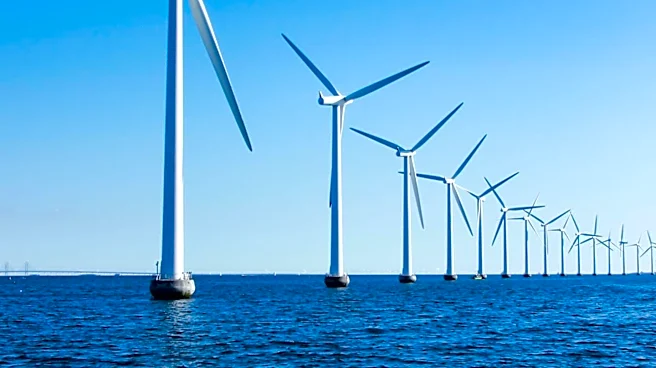
The development of MHK projects represents a significant step towards diversifying renewable energy sources in the U.S. By harnessing the power of ocean currents and tides, these projects could provide a sustainable and reliable energy source, reducing dependence on fossil fuels. The Northeast region, with its extensive coastline, is particularly well-suited for such initiatives. Successful implementation could lead to economic benefits, including job creation in the renewable energy sector, and contribute to national goals for reducing carbon emissions.