






What's Happening?
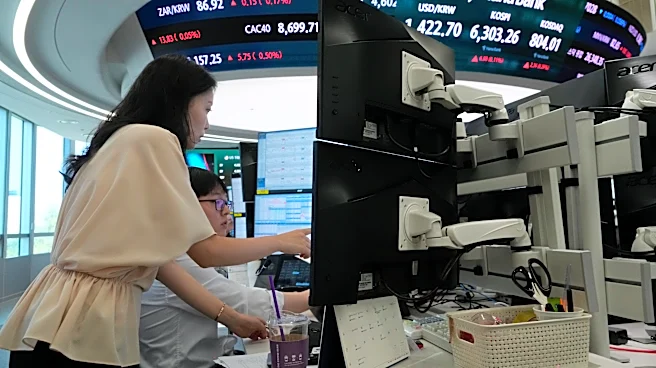
Asian stock markets displayed mixed results following gains on Wall Street, with Japan's Nikkei 225 leading the advances. The Nikkei rose by 2.1%, driven by strong performances from technology companies like Tokyo Electron and Advantest. In contrast,
South Korea's Kospi saw modest gains of 0.7%, with major chipmakers like Samsung Electronics and SK Hynix experiencing slight declines. Meanwhile, oil prices increased as geopolitical tensions in the Middle East influenced market dynamics. Brent crude rose by 0.6% to $84.01 per barrel, while U.S. benchmark crude increased by 0.3% to $78.46 per barrel.
Why It's Important?
The mixed performance of Asian markets reflects the ongoing volatility and uncertainty in global financial markets. The rise in oil prices, influenced by geopolitical tensions, could have significant implications for global energy markets and inflation rates. The performance of technology stocks, particularly in Japan, highlights the sector's resilience and its role in driving market gains. Additionally, the recent U.S. jobs report, which showed unexpected job cuts, has raised hopes that the Federal Reserve might delay interest rate hikes, further influencing market sentiment.
What's Next?
Investors will be closely monitoring upcoming inflation data, including the consumer price index, to gauge the Federal Reserve's potential actions on interest rates. The geopolitical situation in the Middle East, particularly regarding oil supply routes, will also be a key focus, as any escalation could impact global oil prices and economic stability. Market participants will continue to assess the performance of technology stocks and other sectors to identify investment opportunities amid the current economic landscape.