





What's Happening?
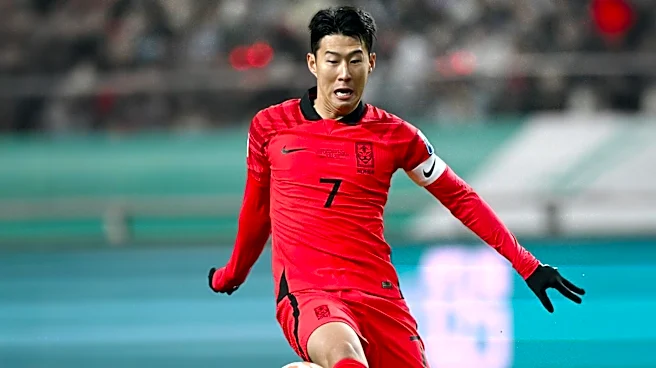
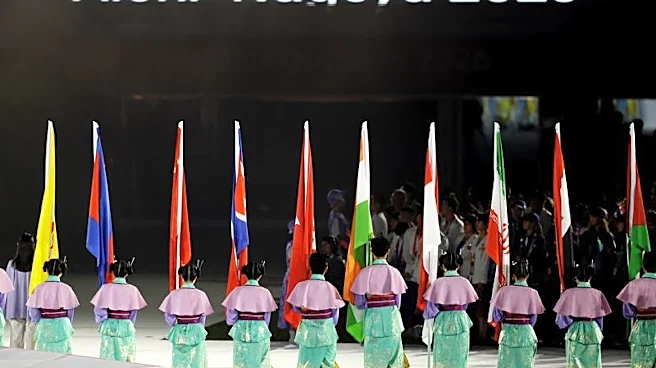
South Korea's government is reviewing its policy of exempting gold-medal-winning athletes from mandatory military service. This comes after public criticism following comments made by some athletes at the recent Asian Games. Three players from the men's
soccer team, including Yang Min-hyuk, Park Seung-soo, and captain Lee Gi-hyuk, made remarks perceived as insensitive regarding their exemption after winning gold. Lee Gi-hyuk notably stated, "I’m not going to the military," while Yang Min-hyuk admitted playing with the military exemption as his primary motivation. These comments sparked outrage among the public and politicians, leading to calls for a reevaluation of the long-standing exemption system. Culture, Sports and Tourism Minister Choi Hwi-young acknowledged that the alternative military service exemption system for artists and athletes "will inevitably have to be scaled back," citing changing public perceptions of fairness and military service.
Why It's Important?
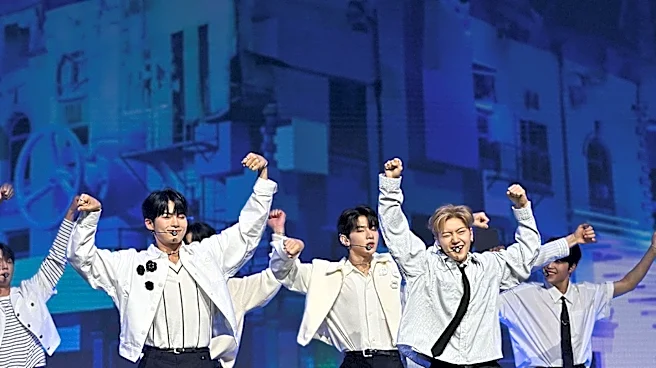
The potential scaling back of military service exemptions for athletes in South Korea carries significant implications for both the nation's sports landscape and its broader societal values. For athletes, particularly those with promising international careers, the exemption has been a powerful incentive, allowing them to pursue their professional paths without interruption. Removing or significantly altering this exemption could force many talented individuals to choose between their athletic careers and mandatory military service, potentially impacting their development and the competitiveness of South Korean sports on the global stage. From a societal perspective, the debate highlights a tension between national pride derived from athletic achievements and the principle of equitable civic duty. The public backlash suggests a growing sentiment that military service should be a universal obligation, regardless of individual accomplishments, especially when compared to the mandatory service of other prominent figures like members of the K-pop group BTS. This shift reflects evolving national values and a demand for greater fairness in civic responsibilities.
What's Next?
The South Korean government is expected to conduct a comprehensive review of the alternative military service exemption system for artists and athletes. Culture, Sports and Tourism Minister Choi Hwi-young has indicated that the system will likely be scaled back. This review will involve assessing the current criteria for exemptions, considering public sentiment, and potentially proposing new regulations. The Ministry of National Defense has also stated plans to cut back or scrap supplementary service, including that designed for artists and athletes, and incorporate these changes into defense reforms. While the exact timeline for these changes is not specified, the public outcry and official statements suggest that revisions are imminent. Major stakeholders, including sports federations, individual athletes, and the general public, will be closely watching the government's decisions, which could significantly alter the career trajectories of future South Korean athletes.
Beyond the Headlines
The controversy surrounding military service exemptions for athletes in South Korea delves into deeper ethical and cultural dimensions within the nation. The mandatory military service is a deeply ingrained aspect of South Korean identity, stemming from its geopolitical situation and the ongoing threat from North Korea. It is viewed by many as a fundamental rite of passage and a patriotic duty. The exemption system, while intended to reward those who bring national prestige, has increasingly been perceived as an unfair privilege, particularly when juxtaposed with the sacrifices made by ordinary citizens and other public figures. This debate reflects a broader societal re-evaluation of what constitutes national service and how it should be recognized. It also highlights the evolving definition of national prestige in a modern, globally connected South Korea, where cultural exports like K-pop now rival traditional sporting achievements in terms of international recognition. The outcome of this review could set a precedent for how South Korea balances individual achievement with collective responsibility in the future.