
What's Happening?
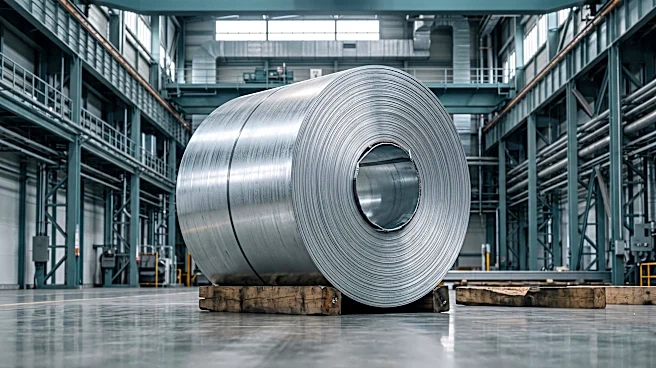
South Korean steelmakers are advocating for the imposition of anti-dumping duties on hot-rolled galvanized steel (HGI) imported from China. This demand follows a nearly fourfold increase in HGI imports
from China, reaching 101,800 tonnes in January-September 2026, compared to 27,500 tonnes in the same period the previous year. The surge in HGI imports is attributed to Chinese producers circumventing existing anti-dumping duties on cold-rolled galvanized steel (CGI), which were imposed by South Korea in October 2025. Chinese HGI is significantly cheaper, costing approximately 15% less than South Korean CGI, due to simplified production processes and state subsidies. Despite calls from local steelmakers to extend duties to HGI, the South Korean government is hesitant, fearing potential legal challenges and a defeat at the World Trade Organization (WTO) if duties are imposed without a separate investigation into HGI's distinct physical properties and production methods.
Why It's Important?
This situation highlights the ongoing global trade tensions and the challenges countries face in protecting domestic industries from what they perceive as unfair competition. For South Korea, the influx of cheap Chinese HGI threatens the profitability and sustainability of its domestic steel industry, potentially leading to job losses and reduced investment. The government's reluctance to act immediately underscores the complexities of international trade law and the significant influence of the WTO. A misstep could result in costly legal battles and damage South Korea's standing in the international trade community. The case also illustrates how producers can adapt to trade restrictions, shifting product types to bypass duties, which necessitates a dynamic and responsive approach to trade policy.
What's Next?
The South Korean government is currently holding off on extending anti-dumping duties to HGI, prioritizing adherence to formal investigation procedures to avoid a WTO lawsuit. Local steelmakers will likely continue to pressure the authorities for protective measures, citing similar actions taken by Australia and India. The government may initiate a separate investigation into HGI to assess its physical properties and production processes, which would be a prerequisite for imposing new duties in compliance with WTO rules. This process could be lengthy and involve detailed analysis of market conditions, production costs, and potential harm to domestic industries. The outcome will significantly influence the future of South Korea's steel sector and its trade relations with China.
Beyond the Headlines
This scenario reflects a broader trend of countries grappling with the impact of subsidized foreign goods on their domestic markets. The distinction between HGI and CGI, and the legal implications of imposing duties on one but not the other, underscores the intricate nature of product classification in trade disputes. The situation also raises questions about the effectiveness of anti-dumping measures when producers can easily pivot to similar, unrestricted products. It highlights the need for comprehensive trade policies that anticipate such circumvention strategies. The potential for a WTO challenge emphasizes the organization's role as a critical arbiter in international trade, influencing national economic policies and the global flow of goods.