





What's Happening?
A recent survey conducted by Morning Consult on behalf of the American Bankers Association (ABA) indicates high satisfaction among U.S. consumers with their banks' digital banking services. The survey found that 95% of consumers rate their bank's online
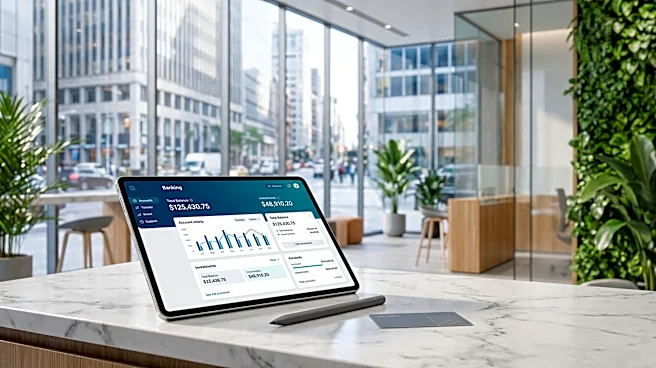
and mobile app experience as 'excellent,' 'very good,' or 'good.' Furthermore, 93% characterize their overall access to banking services, including digital tools and traditional branches, as positive. Three-quarters of respondents believe that innovation and technological improvements by banks are making financial services more accessible to all Americans. For the seventh consecutive year, mobile apps remain the most preferred method for managing bank accounts, with 44% of customers using them most often. Online banking via laptop or PC is the second most popular at 20%, followed by visiting a branch at 10%. Preferences vary by generation, with over half of Generation Z and Millennials favoring mobile apps, while Baby Boomers show a more even split between mobile apps and online banking via PC.
Why It's Important?
This high level of satisfaction with digital banking services underscores a significant shift in how U.S. consumers interact with financial institutions. The widespread adoption of mobile apps and online platforms highlights the success of banks' investments in technology, which are crucial for maintaining customer engagement and expanding access to financial services. This trend suggests that digital channels are no longer just supplementary but are becoming the primary interface for many banking activities. For banks, continued investment in robust, user-friendly, and secure digital platforms is essential to meet evolving consumer expectations and remain competitive. The data also indicates that while digital convenience is paramount, traditional branches still hold value for a segment of the population, particularly for more complex transactions or for older demographics, emphasizing the need for a hybrid approach to service delivery.
What's Next?
Given the strong consumer preference for digital banking, U.S. banks are likely to continue prioritizing and enhancing their online and mobile offerings. This will involve further innovation in app features, security measures like biometric and two-factor authentication, and personalized digital experiences. Banks may also explore integrating emerging technologies to streamline services and improve accessibility. While digital channels will expand, the role of physical branches may evolve, potentially focusing on advisory services, complex transactions, and community engagement rather than routine transactions. The ongoing challenge for banks will be to balance technological advancement with the need to cater to diverse customer preferences, ensuring that both digital-native generations and those who prefer traditional methods are well-served. Future surveys will likely track the continued evolution of these preferences and the impact of new banking technologies.
Beyond the Headlines
The increasing reliance on digital banking platforms raises important considerations beyond mere convenience. Issues of cybersecurity and data privacy become even more critical as sensitive financial information is increasingly managed online. Banks must continuously invest in advanced security protocols to protect against cyber threats and maintain consumer trust. Furthermore, while technology is making financial services more accessible, there's a need to ensure digital literacy across all demographics to prevent a new form of exclusion for those less comfortable with technology. The shift also has implications for the physical footprint of banking, potentially leading to changes in branch networks and staffing models. The long-term impact on community banking and personal financial relationships, traditionally fostered in physical branches, will be an area to watch as digital interactions become the norm.