
What's Happening?
The trend of 'legacy sequels,' which pair original stars with new talent to revive older franchises, has seen mixed results. While some, like 'Creed' and 'Top Gun: Maverick,' have achieved significant
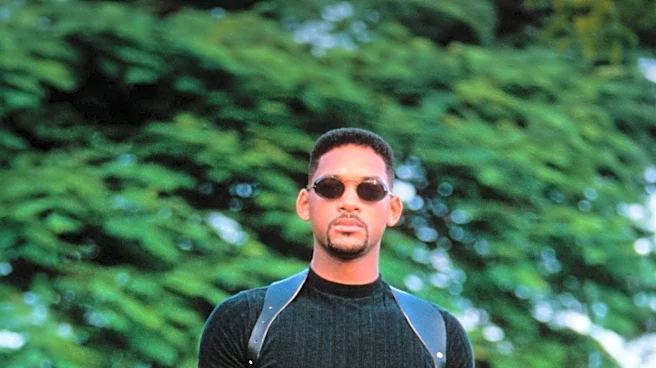
box office success, others have failed to resonate with audiences. Notably, the absence of actor Will Smith has been identified as a critical factor in the underperformance of several such films. Specifically, 'Independence Day: Resurgence' and 'Men in Black: International' are cited as examples where Smith's non-participation contributed to their commercial struggles. These films often falter by either overestimating audience nostalgia or failing to update the franchise effectively while preserving its original appeal. The success of legacy sequels frequently depends on recapturing the essence of the original while introducing new elements, a balance that is often difficult to achieve without key original cast members.
Why It's Important?
The performance of legacy sequels has significant implications for the U.S. film industry, influencing production strategies and investment decisions. The reliance on established intellectual property for box office success is a common practice, but the varying outcomes of these sequels highlight the risks involved. When a major star like Will Smith, known for his consistent box office draw, is absent from a sequel to a franchise he helped define, it can directly impact audience interest and, consequently, revenue. This trend suggests that studios must carefully consider cast continuity and audience expectations when planning reboots or continuations of popular series. The financial success or failure of these films affects not only the studios but also the broader ecosystem of film production, including jobs for cast and crew, and the profitability of theaters and distribution networks. The lesson from these underperforming films is that nostalgia alone is not sufficient; the presence of iconic figures can be crucial.
What's Next?
The mixed results of legacy sequels will likely lead to a more cautious approach from film studios regarding casting and franchise revival strategies. Future legacy sequels may place a greater emphasis on securing the return of original, beloved stars, especially those with a proven track record of drawing audiences. This could result in increased negotiation power for such actors and potentially higher production budgets to accommodate their involvement. Studios might also explore alternative strategies, such as more comprehensive reboots that completely reimagine a franchise rather than attempting to bridge generations with a partial original cast. The industry will continue to analyze the factors contributing to the success or failure of these films, with a particular focus on how to balance nostalgia with fresh storytelling and character development to ensure commercial viability.
Beyond the Headlines
The discussion around legacy sequels and the impact of a star's absence, such as Will Smith's, touches upon deeper cultural and economic aspects of the entertainment industry. It highlights the enduring power of star appeal and how certain actors become synonymous with specific franchises, making their presence almost indispensable for audience acceptance. This phenomenon reflects a broader trend where audiences seek comfort and familiarity in established brands, yet also demand quality and authenticity. The challenge for Hollywood is to innovate within these constraints, balancing the commercial imperative of leveraging existing intellectual property with the artistic need to create compelling new narratives. The ethical dimension also arises in how studios manage expectations and whether they prioritize short-term box office gains over the long-term integrity of a beloved franchise, especially when key creative talents are not involved.