








What's Happening?
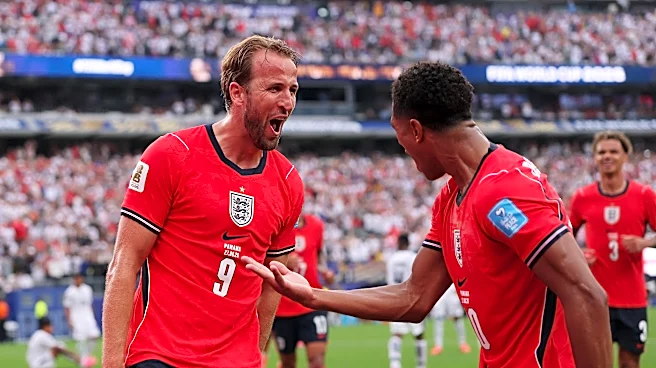
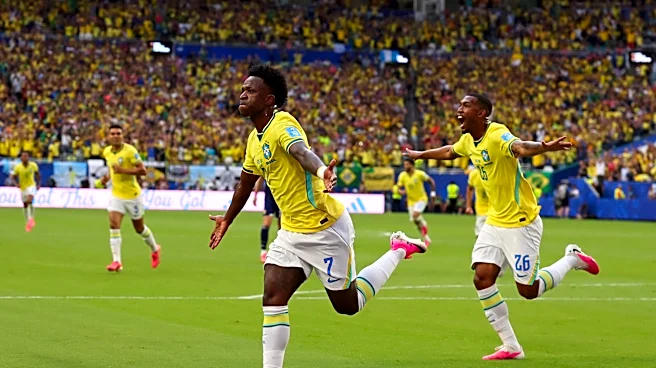
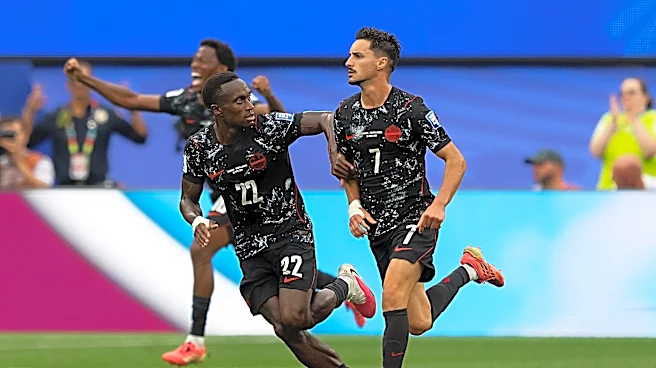
The excitement surrounding the World Cup has reached new heights in the United States following the USMNT's recent victory over Bosnia and Herzegovina, marking their second-ever knockout round win. This success has amplified interest in the upcoming 2030
World Cup, which will be hosted by Spain, Portugal, and Morocco. FIFA is yet to open the bidding process for broadcasting rights, but the competition is expected to be fierce. Currently, Fox holds the broadcasting rights for the ongoing tournament under a $485 million deal, a bargain influenced by the schedule changes of the 2022 World Cup. Major players like Apple, Amazon, Netflix, and NBC are anticipated to enter the bidding fray, with NBC already holding Spanish-language rights for the 2026 World Cup through Peacock and Telemundo.
Why It's Important?
The bidding for the 2030 World Cup broadcast rights is significant as it highlights the growing influence and profitability of live sports broadcasting. The World Cup is one of the most watched sporting events globally, and securing broadcasting rights can significantly boost a network's viewership and advertising revenue. For streaming giants like Apple, Amazon, and Netflix, acquiring these rights would mark a substantial entry into live sports, potentially reshaping the landscape of sports broadcasting. For traditional networks like Fox and NBC, retaining or acquiring these rights is crucial to maintaining their competitive edge in the market. The outcome of this bidding war will have lasting impacts on how audiences consume sports content and could influence future negotiations for other major sporting events.
What's Next?
As the bidding process for the 2030 World Cup rights has not yet commenced, networks and streaming services are likely strategizing their offers to secure a deal. Fox, with its current rights, is expected to make a strong bid to continue its partnership with FIFA. Meanwhile, streaming services may leverage their growing subscriber bases and technological capabilities to present competitive offers. The decision will ultimately depend on which entity can provide the most lucrative and comprehensive package to FIFA. Additionally, the time zone differences for the 2030 World Cup could pose challenges for U.S. broadcasters in terms of scheduling and viewership, potentially influencing their bidding strategies.