







What's Happening?
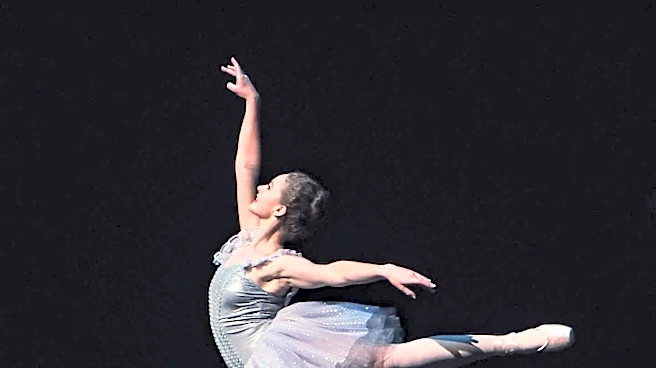
Katherine Barkman, a first soloist with the San Francisco Ballet, has been promoted to principal dancer. This announcement came after her performance as Kitri in 'Don Quixote,' following her role as Tatiana in Yuri Possokhov's new full-length ballet 'Eugene
Onegin.' Barkman's journey to this prestigious position has been unconventional, beginning with recreational dance until age 14 and progressing through a small ballet school in Pennsylvania. Her career includes significant time with the Manila Ballet in the Philippines, where she honed her skills in classical repertoire. Barkman's promotion was announced by artistic director Tamara Rojo, who praised her accomplishments and contributions to the company.
Why It's Important?
Barkman's promotion to principal dancer is significant as it highlights her unique path in the ballet world, challenging traditional routes to success. Her rise from a small studio to a major ballet company underscores the potential for diverse backgrounds in the arts. This promotion not only recognizes her talent and hard work but also sets a precedent for aspiring dancers who may not fit the conventional mold. It reflects a broader trend in the arts towards inclusivity and recognition of diverse talents, potentially inspiring other companies to embrace varied backgrounds and experiences.
What's Next?
Following her promotion, Barkman will continue to perform with the San Francisco Ballet, participating in their upcoming season and international tours. The company is set to perform at prestigious venues such as Jacob's Pillow Festival, the Edinburgh International Festival, and London's Sadler Wells. Barkman's new role as a principal dancer will likely involve more challenging and high-profile performances, further solidifying her status in the ballet community. Her journey and success may influence the company's future casting decisions and inspire other dancers to pursue unconventional paths.
Beyond the Headlines
Barkman's story highlights the evolving landscape of ballet, where traditional barriers such as height and background are being reconsidered. Her success challenges the stereotype of the 'ideal' ballet dancer and promotes a more inclusive and diverse representation in the arts. This shift could lead to broader changes in how talent is recognized and nurtured in ballet and other performing arts, encouraging a more varied and rich cultural expression.