




What's Happening?
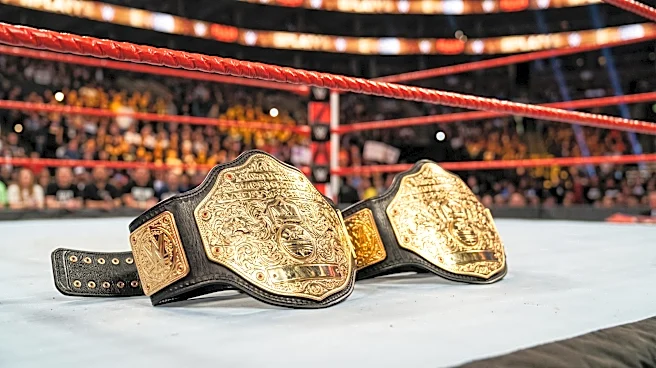
AEW World Champion Will Ospreay recently discussed his decision to perform the 'Black Arrow' maneuver during his match against Ricochet on 'AEW Dynamite.' This move was a signature of fellow AEW star Pac, who recently passed away. Ospreay revealed in an interview
with Brandon Kravitz that he had not performed the dangerous move in years due to a previous near-miss that 'spooked' him. Despite his apprehension, Ospreay felt compelled to execute the Black Arrow as a tribute to Pac, acknowledging the widespread hope among fans and wrestlers that someone would perform it. He stated that he had to relearn the move and that his performance in the match was the first time he had successfully completed it in approximately eight years. Ospreay shared that he was on his way to a Michael Jackson show in Las Vegas when he learned of Pac's death, prompting him to return to his room to mourn.
Why It's Important?
Ospreay's decision to perform the Black Arrow carries significant emotional weight within the professional wrestling community. It serves as a public act of remembrance and a tribute to a fallen colleague, highlighting the close bonds and shared experiences among wrestlers. This gesture provided an 'emotional release' for both his peers backstage and the fanbase, allowing them to collectively process their grief. Such acts of tribute are crucial in professional wrestling, where performers often develop deep personal and professional relationships. It also underscores the dedication and risk wrestlers undertake, as Ospreay willingly performed a move he considered dangerous and had avoided for years, purely out of respect and a desire to honor Pac's legacy. This event reinforces the sense of community and shared humanity within the often theatrical world of professional wrestling.
What's Next?
While the immediate impact of Ospreay's tribute has been felt, the broader implications for AEW and its roster may include a continued emphasis on honoring Pac's memory in various ways. Other wrestlers might also incorporate tributes or references to Pac in their matches or promos, further solidifying his legacy within the promotion. For Ospreay, this act of courage and respect could further endear him to fans and solidify his position as a respected champion, not just for his in-ring prowess but also for his character and leadership. The emotional resonance of this event may also influence future storytelling within AEW, potentially leading to narratives that reflect on loss, remembrance, and the enduring spirit of camaraderie among competitors. The wrestling community will likely continue to reflect on Pac's contributions and the impact he had on his peers.
Beyond the Headlines
Beyond the immediate emotional impact, Ospreay's performance of the Black Arrow touches upon deeper themes of legacy, risk, and collective mourning within performance arts. In professional wrestling, signature moves are often intrinsically linked to a performer's identity, and Ospreay's adoption of Pac's move, even temporarily, signifies a passing of the torch or a symbolic continuation of Pac's presence. This act also highlights the unique way professional wrestling allows for public grieving and communal healing through performance. The willingness to undertake a dangerous maneuver for emotional and commemorative reasons speaks to the profound respect and brotherhood that can exist in high-stakes professions. It also raises questions about how performers navigate personal grief while maintaining their professional responsibilities, especially in a physically demanding and emotionally charged environment.