






What's Happening?
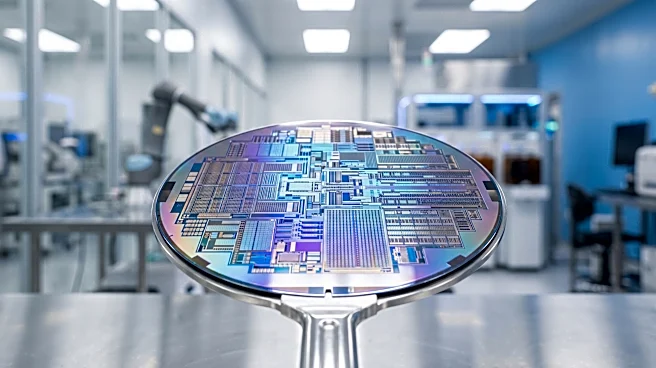
The semiconductor industry, particularly the AI sector, is showing signs of a potential bubble, according to market analysts Tim Travis and Tobias Carlisle. They highlight that companies like Micron and SK hynix face immense pressure to maintain production
due to high fixed costs, even if demand wanes. This situation, where factories cannot be easily idled, could lead to excess supply if data center construction slows or if the market experiences a downturn. The discussion points to a disconnect between the transformative nature of AI technology and the financial realities of the companies building its infrastructure. While AI is undeniably a world-changing technology, the rapid investment and high valuations, coupled with negative free cash flows and significant capital expenditure, raise concerns about the sustainability of current market conditions. The analysts draw parallels to past tech bubbles, such as the dot-com era, where revolutionary technologies still led to poor investments due to overvaluation and unsustainable business models.
Why It's Important?
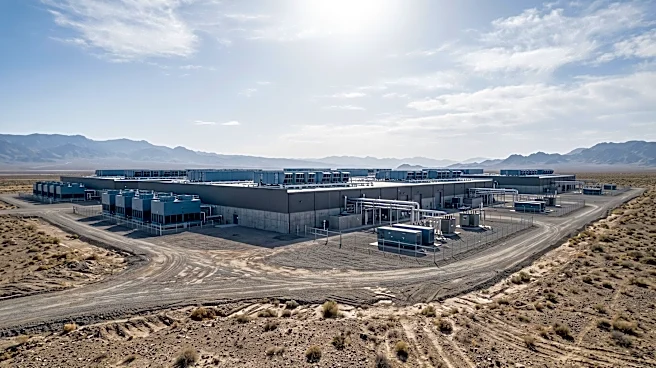
This analysis is crucial for U.S. investors, businesses, and policymakers as it highlights potential vulnerabilities within a critical sector of the economy. A semiconductor bubble burst could have far-reaching consequences, impacting not only the stock market but also the broader technology industry and any sector reliant on advanced computing. For U.S. companies, an oversupply of chips could lead to price wars, reduced profitability, and potential bankruptcies among manufacturers. Investors could face significant losses if valuations are indeed inflated. From a policy perspective, understanding these risks is vital for guiding investments in domestic chip manufacturing and ensuring the stability of the supply chain. The discussion also touches on the political resistance to data center construction in the U.S., which could further complicate supply-demand dynamics by limiting the infrastructure needed to utilize advanced chips. The high fixed costs and the 'quantitized product' nature of semiconductors mean that market corrections can be particularly severe, affecting employment and economic growth.
What's Next?
The immediate future will likely involve continued scrutiny of semiconductor company valuations and the pace of data center development. If political resistance to data centers persists or intensifies, it could create a bottleneck for AI adoption and chip utilization, potentially leading to an oversupply of GPUs and other components. Companies like Micron and SK hynix will need to carefully manage their production capacities to avoid significant inventory gluts. Investors are advised to exercise valuation discipline and consider the long-term competitive advantages of companies in the sector, rather than solely focusing on growth narratives. The market may experience increased volatility, offering opportunities for those who can identify undervalued assets after potential corrections. The ongoing competition among major tech players like Google, Microsoft, Anthropic, and Meta in the AI space will also influence demand and pricing dynamics for underlying semiconductor technologies.
Beyond the Headlines
The debate over a potential semiconductor bubble extends beyond mere financial metrics, touching upon the fundamental nature of technological revolutions and market cycles. The analogy to past innovations like railways and electricity suggests that while the technology is transformative, the initial investment phase often involves overbuilding and speculative fervor, followed by a 'trough of disillusionment.' This implies that even if AI fundamentally changes the world, not all early investors or companies will succeed. The discussion also raises questions about the distribution of value creation, with innovators often capturing only a small percentage while consumers benefit disproportionately. This 'consumer surplus' could be a double-edged sword for chip manufacturers, as it implies downward pressure on prices and margins over time. The political and social dimensions, such as resistance to data centers, highlight how technological advancement is intertwined with public perception and regulatory environments, adding layers of complexity to market forecasts.