


What's Happening?
Recent biomechanical studies are providing crucial insights into optimal stand-up paddleboarding (SUP) techniques, particularly regarding standing versus kneeling positions and their impact on body mechanics and injury prevention. A 2023 study found that
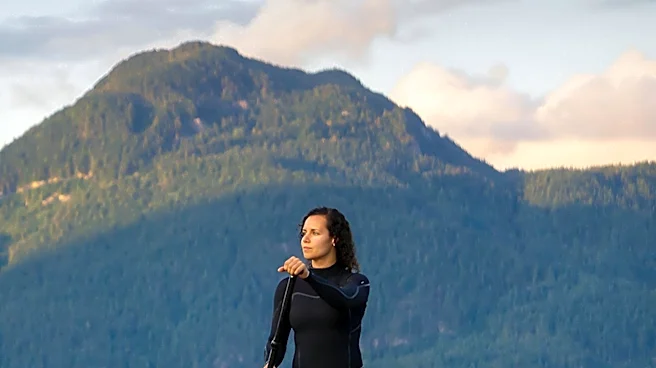
recreational paddlers spend approximately 66% of their stroke cycles standing, noting that standing increases trunk and hip motion, while kneeling demands a greater shoulder range of motion. This research suggests that spending most of a session standing may reduce the risk of shoulder strain. Another kinematics study indicated that the opposite shoulder moves more during both standing and kneeling, reinforcing the caution that kneeling does not eliminate upper-body demands. Experienced paddlers demonstrate more hip movement and less overall shoulder range compared to novices, coordinating hips and trunk around a planted blade for efficient propulsion. Off-water preparation, including resistance training, is also highlighted as key for injury prevention, addressing potential issues in shoulders, elbows, back, and lower body.
Why It's Important?
These findings are highly significant for the U.S. sports and fitness industry, particularly for SUP instructors, equipment manufacturers, and recreational paddlers. By understanding the biomechanical differences between standing and kneeling, instructors can provide more effective and safer training, reducing the incidence of common paddling injuries. This can lead to a more positive and sustainable experience for participants, encouraging long-term engagement in the sport. For equipment manufacturers, these insights can inform ergonomic design improvements in paddles and boards, optimizing them for efficient body mechanics and injury prevention. Furthermore, the emphasis on off-water resistance training highlights a holistic approach to athlete development, integrating SUP into broader fitness regimens. This scientific backing elevates SUP from a casual pastime to a recognized sport with specific training and technique requirements, potentially attracting more serious athletes and expanding the market for related fitness services and products.
What's Next?
The insights from these biomechanical studies are likely to drive several developments in the SUP community. We can expect to see updated best practice guidelines for paddling techniques, with a stronger emphasis on proper body mechanics and injury prevention, especially for beginners. SUP training programs and certifications may integrate these findings into their curricula, leading to more standardized and effective instruction. Equipment manufacturers might respond by designing paddles and boards that better facilitate optimal body movement and reduce strain, potentially leading to new product innovations. Additionally, there could be an increase in specialized fitness programs tailored for SUP athletes, focusing on core strength, hip mobility, and shoulder stability. Further research is also anticipated to delve deeper into specific injury mechanisms and long-term effects of different paddling styles, continuously refining our understanding of safe and efficient SUP practices.
Beyond the Headlines
Beyond the immediate practical applications, the biomechanical analysis of SUP paddling reflects a broader trend in sports science: the use of data-driven insights to optimize human performance and well-being. This scientific approach transforms recreational activities into subjects of rigorous study, enhancing safety and enjoyment for participants. Ethically, providing evidence-based guidance on technique and injury prevention demonstrates a commitment to participant welfare, fostering a responsible sports culture. Culturally, as SUP continues to grow in popularity across the U.S., integrating scientific principles into its practice can elevate its status, attracting individuals who value informed and effective physical activity. This also encourages a more mindful engagement with the body, where understanding how movements impact physical health becomes an integral part of the athletic experience, promoting longevity in sports participation and a deeper connection between activity and well-being.