







What's Happening?
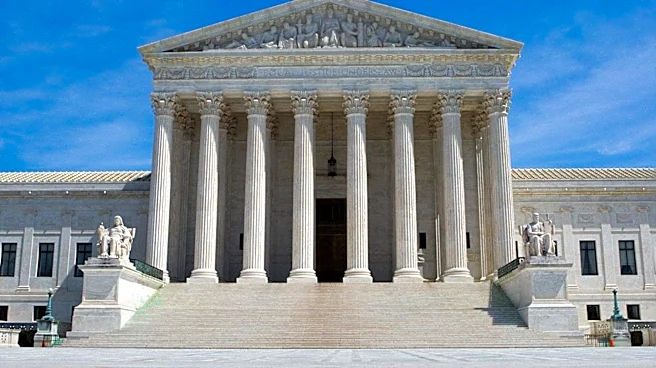
The Liberty Justice Center (LJC) has initiated 'Operation Refund Rescue,' a program designed to assist small businesses in the U.S. with recovering tariff payments deemed unlawful by a recent Supreme Court ruling. These tariffs were imposed under the International
Emergency Economic Powers Act (IEEPA). Despite the Supreme Court's decision and the U.S. Customs and Border Protection (CBP) beginning to distribute refunds through its CAPE system, many small businesses are still unable to access these refunds for entries that have reached final liquidation without obtaining an individual court order. This situation has created a two-tiered refund system where larger businesses with legal resources can pursue their refunds, while smaller entities face significant financial barriers due to the cost of federal lawsuits. LJC's new initiative, part of its Project TERRA (Tariff Equity and Refund Resource for America), aims to bridge this gap by covering the costs of targeted federal litigation for qualifying small businesses to secure the necessary court relief.
Why It's Important?
This initiative is crucial for ensuring equitable access to justice and financial recovery for small businesses across the U.S. The existence of a two-tiered refund system disproportionately affects smaller importers, who may find the cost of legal action prohibitive relative to the refund amount they are seeking. This creates an unfair disadvantage, undermining the Supreme Court's ruling that declared the tariffs unlawful. By providing pro bono legal assistance, LJC is directly addressing a systemic barrier that prevents many small businesses from recouping funds that were illegally collected. The success of 'Operation Refund Rescue' could set a precedent for how government agencies handle refunds following adverse court rulings, emphasizing the need for accessible and uniform refund processes for all affected parties, regardless of their size or legal budget. It highlights the ongoing struggle for small businesses to navigate complex legal and administrative landscapes.
What's Next?
The Liberty Justice Center plans to file individual actions in the U.S. Court of International Trade for qualifying small businesses, seeking court orders that will allow their entries to be considered for reliquidation and refunds. LJC will also provide guidance on the subsequent administrative refund process. The program has an initial capacity to process 100 filings. Concurrently, LJC is calling on the private trade bar to offer pro bono assistance to small importers, noting that larger firms have benefited significantly from litigation related to these tariffs. LJC continues its broader legal campaign to secure nationwide refund relief, which would eliminate the need for individual lawsuits altogether. The outcome of these individual cases and the broader advocacy efforts will determine the extent to which all affected U.S. businesses can recover their unlawful tariff payments.
Beyond the Headlines
The situation underscores a deeper issue regarding the implementation of judicial decisions and the accessibility of legal recourse for smaller entities. While the Supreme Court ruled the tariffs unlawful, the practical hurdles for small businesses to reclaim their money reveal a gap between legal victory and actual restitution. This scenario raises questions about governmental accountability in rectifying errors and ensuring that all affected parties are made whole without undue burden. The call for pro bono legal assistance also highlights the ethical responsibilities of the legal profession to support those who cannot afford representation, especially when systemic issues create barriers to justice. This initiative could spark broader discussions on reforming refund mechanisms to be more inclusive and less litigious, ensuring that legal victories translate into tangible relief for all citizens and businesses, not just those with significant resources.