






What's Happening?
The Town of Paxton has been awarded a $100,000 grant from MassDevelopment to support planning and predevelopment efforts for the former Anna Maria College campus. The college ceased operations in the spring and subsequently filed for Chapter 11 bankruptcy
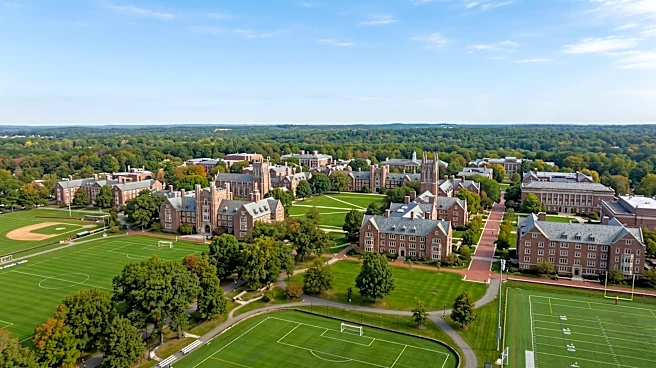
in June, citing enrollment declines and operating losses. The grant will fund technical assistance to explore future uses for the approximately 260-acre campus, which includes 16 buildings spanning 340,000 square feet, such as academic facilities, residence halls, and athletic fields. MassDevelopment is currently scoping the project, with details regarding timelines, public meetings, and potential town meeting votes yet to be determined. The initiative will involve community engagement and may lead to zoning recommendations, which would be subject to town processes and board approvals before any consideration at a town meeting. The campus is currently marketed for sale by Kelleher & Sadowsky.
Why It's Important?
This grant is crucial for Paxton as the future of the former Anna Maria College campus will significantly influence the town's economy for years to come. The technical assistance will enable local leaders to assess potential uses for the site, which could include creating new housing opportunities and supporting future economic growth. Paxton Town Administrator Robert Birkbeck emphasized that the property represents both a significant opportunity and a considerable responsibility for the town. The funding will allow Paxton to conduct essential market analyses and property condition assessments, which are vital for guiding future zoning, development, and property valuation decisions. Without this grant, such critical work would not be feasible within the town's current budget, making the award particularly valuable for informed, strategic decision-making that serves the community's best interests.
What's Next?
MassDevelopment plans to contract with Horsley Witten Group and U3 Advisors to conduct a comprehensive campus evaluation. This evaluation will include a market and fiscal impact analysis, a property conditions assessment, and the development of potential zoning strategies. These strategies aim to support new tax revenue generation, job creation, and housing production within Paxton. The current zoning for the campus, General Residence B, limits residential development to large lots (minimum 60,000 square feet), which is incompatible with reusing existing buildings for non-educational purposes. Therefore, zoning changes will likely be a key component of the redevelopment process. The project will involve extensive community engagement, and any proposed zoning recommendations will undergo review by relevant town boards before being presented for a town meeting vote. This initiative is part of a broader MassDevelopment effort to assist communities impacted by private college closures, indicating a structured approach to repurposing such significant properties.
Beyond the Headlines
The closure of Anna Maria College and the subsequent redevelopment efforts highlight a growing trend in higher education, where smaller private institutions face financial challenges leading to closures. This situation presents both a challenge and an opportunity for affected communities like Paxton. The ethical dimension involves ensuring that the redevelopment plans genuinely serve the community's needs, balancing economic growth with preserving local character and addressing potential impacts on infrastructure and public services. Legally, any zoning changes will require careful navigation of local ordinances and state regulations. Culturally, the former college campus holds historical significance for Paxton, and its transformation will inevitably alter the town's identity. The long-term shift could see Paxton evolve from a college town to a more diversified community, potentially attracting new residents and businesses, but also requiring careful planning to manage this transition effectively and sustainably.