






What's Happening?
Kodama, a California-based startup specializing in physical AI for forestry, has successfully raised $7 million in a seed funding round. This investment brings the company's total funding to $14 million. The funding round was co-led by Konvoy Ventures
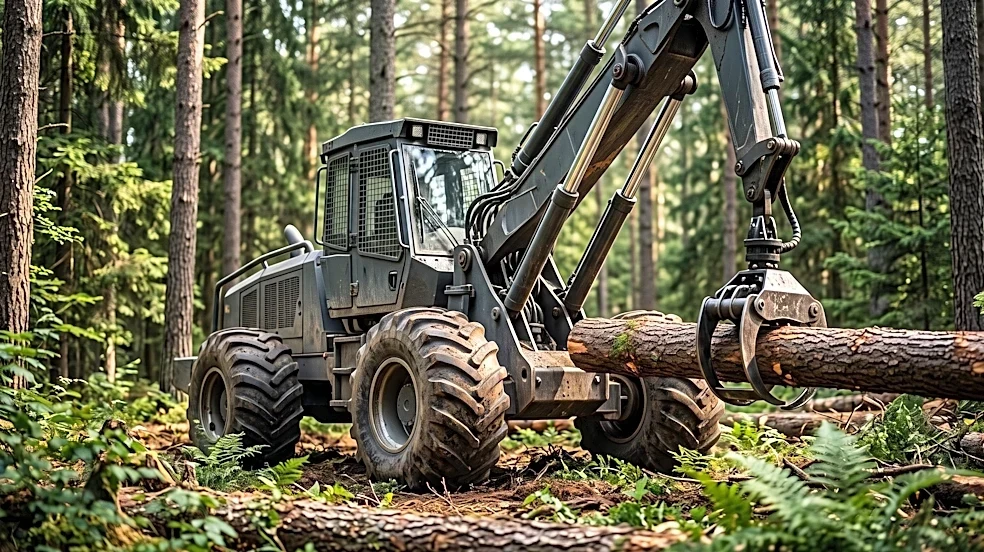
and Breakwater Ventures, with additional participation from Blue Forest Asset Management, NYA Ventures, Breakthrough Energy Ventures, Congruent Ventures, Dangerous Ventures, M1C Ventures, and BTG Pactual. Kodama's technology, which combines supervised autonomy with teleoperation, is already deployed in commercial logging operations across the southeastern U.S. Over the past six months, machines equipped with Kodama's system have moved over 100,000 tons of timber. The company aims to address the significant labor reliability challenges faced by the forestry industry, where demand for timber, forest management, and wildfire resilience is increasing, but finding and retaining operators is difficult due to the physically demanding nature of the work and long travel times to remote sites. Kodama's approach allows operators to manage machines remotely, improving working conditions and potentially extending operational hours.
Why It's Important?
This funding is crucial for the U.S. forestry industry, which is grappling with a severe labor shortage and high turnover rates. The physically demanding nature of operating heavy machinery in remote forest environments leads to significant workforce challenges, impacting productivity and the industry's ability to meet growing demands for timber and forest management, including wildfire mitigation efforts. Kodama's AI-powered solution offers a pathway to enhance labor reliability and operational efficiency by enabling remote operation and supervised autonomy. This not only improves the quality of life for operators by reducing the physical strain and travel time but also allows for extended operational hours, such as night shifts, which are currently limited by human factors. The adoption of such technology could lead to more consistent output, reduced operational costs associated with labor and transportation, and a safer working environment, ultimately strengthening the economic viability and sustainability of the U.S. forestry sector.
What's Next?
Kodama plans to utilize the newly secured funding to support further commercial deployments of its technology, deepen partnerships with Original Equipment Manufacturers (OEMs), and continue developing its supervised autonomy capabilities for complex off-road environments. The company is currently integrated with two of the largest OEMs in the forestry equipment world, and its hardware stack includes advanced components like NVIDIA compute, multiple cameras, LiDAR sensors, Starlink, and GPS. The immediate focus is on enabling one operator to control multiple machines, which would significantly boost productivity. Kodama also aims to expand its data layer for clients, generating high-resolution under-canopy maps that provide valuable insights into forest parameters like trees per acre and diameter at breast height. While currently focused on the southeastern U.S. timber industry, Kodama sees potential for its technology in wildfire mitigation and broader land management, with international interest already emerging from regions like Brazil and Australia.
Beyond the Headlines
The introduction of physical AI and remote operation in forestry by companies like Kodama represents a significant shift in how labor-intensive industries can address workforce challenges and improve operational safety. Beyond the immediate economic benefits of increased efficiency and reduced costs, this technology has profound implications for the human element of the industry. By removing operators from the physically demanding and often hazardous environment of the forest, it can attract a new generation of workers who may have previously been deterred by the harsh conditions. This could lead to a more diverse workforce, including individuals with gaming experience who possess the necessary hand-eye coordination for remote operation. Furthermore, the data collection capabilities of Kodama's system offer a deeper understanding of forest ecosystems, potentially leading to more precise and sustainable forest management practices. The ethical considerations around job displacement and the need for retraining existing workers will also be critical as this technology becomes more widespread, necessitating proactive strategies to ensure a just transition for the workforce.