






What's Happening?
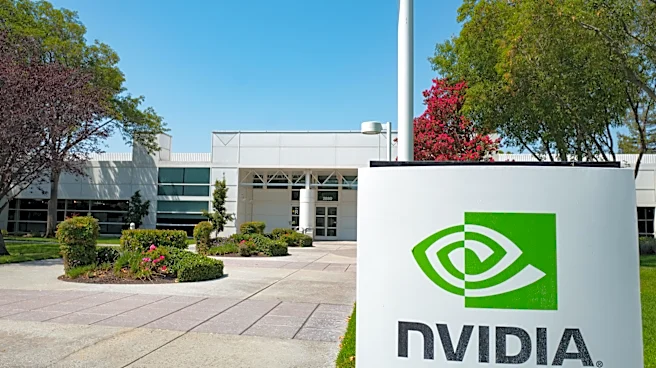
Nvidia is reportedly investing billions of dollars to expand advanced chip-packaging capacity at a Taiwanese supplier, Siliconware Precision Industries (SPIL), a subsidiary of ASE Technology. This significant financial injection aims to alleviate severe
manufacturing bottlenecks that are threatening to slow the delivery of high-performance artificial intelligence (AI) processors. The global demand for AI infrastructure has led to unprecedented capital flowing into advanced packaging, a critical stage in semiconductor manufacturing that has become the primary choke point for producing next-generation hardware. Taiwan Semiconductor Manufacturing Company (TSMC) currently dominates the market for sophisticated packaging technologies like Chip-on-Wafer-on-Substrate (CoWoS), which is essential for Nvidia, AMD, and Broadcom processors. However, TSMC's limited capacity has forced chip designers to seek alternatives. Nvidia's funding to SPIL is part of a broader industry effort to diversify packaging sources, with rival AMD also planning to invest over $10 billion in Taiwan's semiconductor ecosystem, partnering with ASE, SPIL, and Powertech Technology.
Why It's Important?
The bottleneck in advanced chip packaging poses a significant threat to the growth and deployment of AI technologies globally, including within the U.S. This investment by Nvidia highlights the critical importance of packaging in the semiconductor supply chain, which was once considered a routine step but now accounts for a substantial portion of a chip's total value. The ability to efficiently package AI chips directly impacts the speed at which new AI models can be trained and deployed, affecting industries from cloud computing to autonomous vehicles. By investing in expanded capacity, Nvidia aims to secure its supply chain, maintain its market leadership in AI processors, and ensure the continued advancement of AI applications. This move also underscores the strategic importance of Taiwan in the global semiconductor industry and the efforts by U.S. companies to mitigate supply chain risks by diversifying manufacturing partners.
What's Next?
The expansion of advanced packaging capacity at suppliers like SPIL is expected to gradually ease the current bottlenecks, potentially leading to increased availability of high-performance AI chips. This could accelerate the development and deployment of AI technologies across various sectors. Other chipmakers are likely to follow Nvidia's lead in investing directly in packaging capabilities or forming strategic partnerships to secure their own supply. The increased competition and investment in advanced packaging technologies, such as panel-level packaging being explored by Powertech Technology, could drive innovation and efficiency in the semiconductor industry. However, demand for AI chips is projected to remain exceptionally high, suggesting that capacity constraints may persist for some time, even with these significant investments.
Beyond the Headlines
This development signifies a fundamental shift in the semiconductor industry, where advanced packaging is no longer a secondary concern but a core strategic imperative. The increasing complexity of AI chips, which often integrate multiple dies into a single package, makes sophisticated packaging techniques indispensable. This shift could lead to a re-evaluation of investment priorities across the semiconductor ecosystem, with more capital directed towards packaging innovation and infrastructure. Furthermore, the reliance on a few key players for advanced packaging, primarily in Taiwan, highlights geopolitical risks and the need for greater geographical diversification in semiconductor manufacturing. The substantial financial commitments by leading AI chip companies also indicate a move towards deeper, more integrated partnerships within the supply chain, potentially reshaping traditional client-supplier relationships.