


What's Happening?
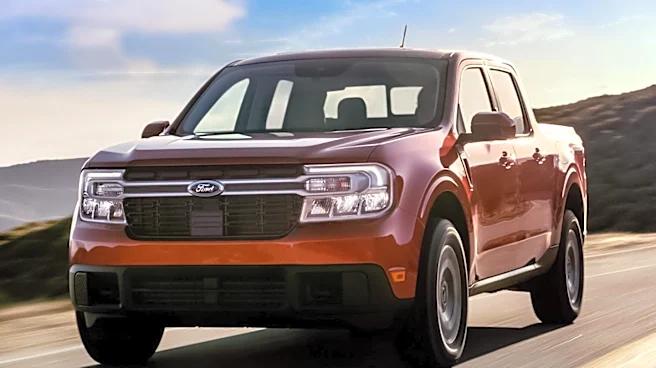
The Ford Maverick Hybrid is gaining attention as a practical and economical alternative to larger, gas-guzzling trucks like the Ford F-150. Priced starting at $28,145, the Maverick Hybrid offers a compact design with a decent-sized bed and good fuel economy,
making it suitable for urban environments and everyday use. The vehicle's hybrid engine provides a balance between power and efficiency, appealing to consumers facing high gas prices. Ford's strategy includes positioning the Maverick as a replacement for some SUVs, with plans to introduce a midsize electric truck in 2027. This new model aims to offer similar practicality and affordability, highlighting the ongoing transition in the automotive industry towards electric vehicles.
Why It's Important?
The introduction of the Ford Maverick Hybrid reflects a significant shift in consumer preferences towards more fuel-efficient and environmentally friendly vehicles. As gas prices remain high, the demand for hybrids and electric vehicles is expected to grow, challenging traditional truck models. Ford's strategy to offer a smaller, more economical truck aligns with broader industry trends towards sustainability and efficiency. This move could influence other automakers to develop similar models, potentially reshaping the market dynamics in the U.S. automotive industry. The Maverick's success could also encourage further investment in hybrid and electric vehicle technologies, accelerating the transition to a more sustainable transportation future.
What's Next?
Ford's upcoming midsize electric truck, set to launch in 2027, will likely compete directly with the Maverick Hybrid, offering consumers more options in the affordable, practical vehicle segment. As the company continues to innovate, it may face challenges in balancing the production and marketing of both hybrid and electric models. Consumer response to these offerings will be crucial in determining Ford's future strategy. Additionally, regulatory changes and advancements in battery technology could impact the development and adoption of electric vehicles, influencing Ford's long-term plans and the broader automotive landscape.