





What's Happening?
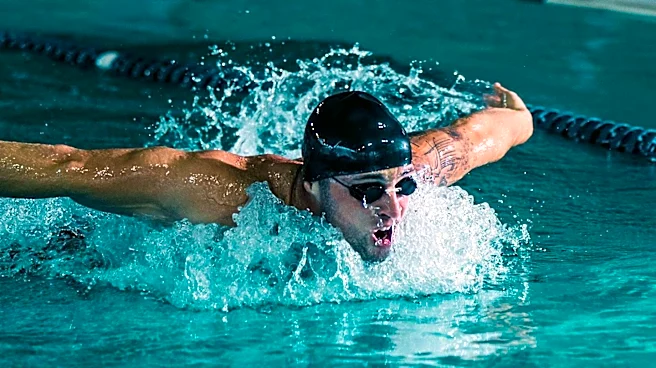
Mollie O'Callaghan, a prominent swimmer, nearly abandoned her career at age 14 due to significant financial strain. Her parents actively fundraised, organizing raffles and sausage sizzles, to cover competition expenses and new swimwear, once raising 5,000
Australian dollars for a national competition in Melbourne. Her mother, Toni, a Croatian immigrant, worked at a nursery wholesale company and drove O'Callaghan long distances for early morning training sessions. Her father, Nick, a British immigrant, managed a consulting firm and meticulously collected reports about her progress. O'Callaghan also grappled with severe anxiety, experiencing panic attacks before major competitions, including the 2022 World Championships in Budapest and the 2024 Olympic trials. Her coach, Dean Boxall, played a crucial role in her development, employing challenging motivational tactics to push her beyond her comfort zone, which O'Callaghan acknowledges was essential for her success.
Why It's Important?
This narrative highlights the often-unseen financial and psychological burdens faced by aspiring athletes, even those who achieve elite status. The extensive efforts of O'Callaghan's parents underscore the critical role of family support in nurturing athletic talent, particularly when institutional funding is insufficient or cut. Her struggles with anxiety, despite her competitive drive, shed light on the mental health challenges prevalent in high-performance sports. This story can resonate with many families and young athletes in the U.S. who face similar obstacles, emphasizing that talent alone is often not enough without robust support systems and mental resilience. It also brings attention to the demanding coaching styles that, while sometimes controversial, can be instrumental in an athlete's journey to the top.
What's Next?
Mollie O'Callaghan is expected to continue her swimming career, building on her past successes, including a gold medal in the 100m freestyle at the 2022 World Championships and her participation in the 2020 Tokyo Olympics. Her ongoing battle with anxiety suggests a continued focus on mental well-being will be crucial for her sustained performance. Her coach, Dean Boxall, will likely continue to employ his unique coaching methods, adapting them as O'Callaghan progresses. The support from her family will remain a cornerstone of her career, as she aims for future international competitions. Her journey will likely inspire discussions within the sports community about athlete welfare, financial aid for young talents, and the psychological pressures of competitive sports.
Beyond the Headlines
O'Callaghan's story delves into the profound personal sacrifices made by athletes and their families in pursuit of sporting excellence. The financial struggles she faced as a teenager reveal systemic issues in sports funding, where promising talents can be lost due to economic barriers. Her experience with panic attacks before major events underscores the intense psychological toll of elite competition, prompting a broader conversation about mental health support in sports. The dynamic between O'Callaghan and her coach, Dean Boxall, illustrates the complex and often challenging mentor-mentee relationships that shape an athlete's career, where tough love can be a catalyst for growth. This narrative transcends mere athletic achievement, offering a human story of perseverance, family dedication, and the internal battles fought on the path to success.