


What's Happening?
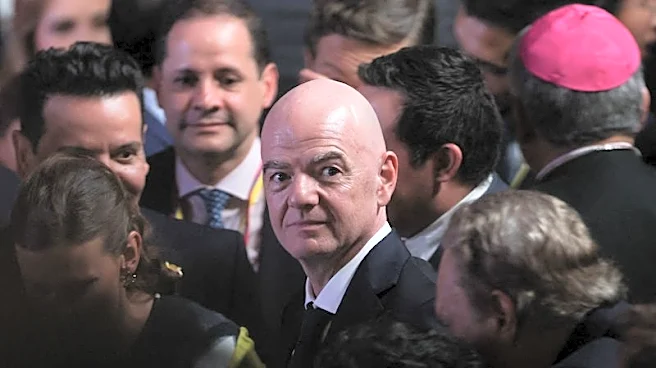
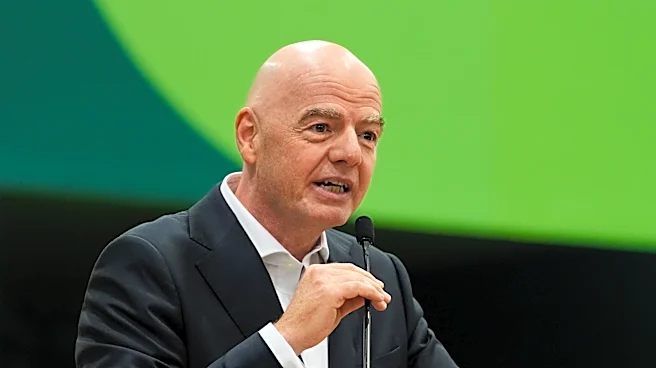
FIFA President Gianni Infantino is facing criticism from three major football confederations—UEFA, CONCACAF, and AFC—following his proposal to introduce private investment into FIFA competitions, including the World Cup. The plan, which was quickly withdrawn,
has been condemned by these confederations as an attempt to centralize power and undermine the collective governance of football. The confederations issued a joint letter emphasizing that football 'belongs to no individual' and criticized Infantino for breaking trust and placing himself above the collective. The backlash has been significant, with UEFA even threatening to boycott future World Cups if the plan proceeded. Despite Infantino's previous success in organizing a World Cup in North America, his leadership is now under scrutiny, with potential challengers like CONCACAF President Victor Montagliani emerging.
Why It's Important?
The controversy surrounding Infantino's proposal highlights the ongoing tension between commercial interests and the traditional governance structures in international sports. The backlash from UEFA, CONCACAF, and AFC underscores the importance of maintaining a collective approach to managing football, which is seen as a global sport with shared responsibilities. The potential boycott by UEFA could have significant implications for the World Cup, potentially affecting its prestige and financial viability. This situation also reflects broader concerns about the influence of private investment in sports and the need for transparency and accountability in decision-making processes within major sports organizations.
What's Next?
As Infantino seeks a fourth term as FIFA President, the upcoming election in March will be crucial. The deadline for declaring candidacies is November 18, and it remains to be seen if Montagliani or other potential candidates will challenge Infantino. The confederations' letter suggests a demand for greater accountability and transparency in FIFA's operations, which could influence the organization's future policies and leadership dynamics. The situation may also prompt further discussions on the role of private investment in sports and the governance of international competitions.