




What's Happening?
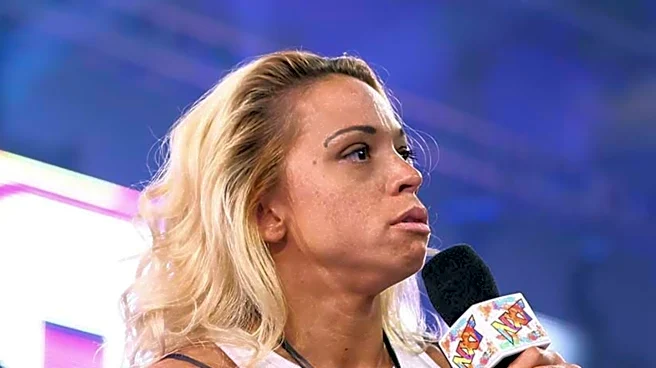
Former WWE star Zoey Stark (Zoey Serrano) has voiced her concerns regarding the allocation of match time for women in professional wrestling. In a video posted to her YouTube channel, Stark stated that if she could change one aspect of women's wrestling,
it would be the amount of time given to female competitors. She claimed that women's matches are frequently cut short, estimating that this occurs in 90-95% of their appearances. Stark explained that female wrestlers often prepare multiple contingency plans (Plan A, B, and C) to adapt quickly if their match time is reduced, ensuring they can still conclude the match effectively. While acknowledging that time cuts can happen to male wrestlers, she believes it is a far more prevalent issue for women.
Why It's Important?
Zoey Stark's comments highlight a significant disparity in professional wrestling, pointing to potential systemic issues in how women's matches are prioritized and presented. This unequal allocation of time can hinder the development of compelling storylines, limit the showcasing of athletic talent, and ultimately impact the audience's perception of women's wrestling as a whole. If female competitors consistently receive less time, it can restrict their ability to tell a complete story in the ring, execute complex sequences, and build dramatic tension, potentially leading to less engaging matches. This issue affects not only the wrestlers' careers and creative expression but also the broader movement for gender equality in sports entertainment, suggesting that despite advancements, parity in opportunity and presentation remains a challenge.
What's Next?
Zoey Stark's public statement could spark further discussion within the professional wrestling community regarding match time allocation for women. It may encourage other female wrestlers to share similar experiences, potentially leading to increased pressure on promotions to address these concerns. While immediate policy changes are not guaranteed, such public commentary often contributes to a gradual shift in industry practices and audience expectations. Promotions might face scrutiny to demonstrate equitable match times, especially as women's wrestling continues to gain popularity and critical acclaim. This could lead to more deliberate scheduling and creative planning to ensure women's matches are given adequate time to develop and showcase their full potential.
Beyond the Headlines
Beyond the immediate concern of match duration, Stark's remarks touch upon deeper issues of perceived value and respect within the wrestling industry. The need for female wrestlers to constantly prepare multiple contingency plans suggests an underlying expectation of being undervalued or having their segments cut, which can be mentally taxing and creatively stifling. This situation reflects broader societal challenges where women in various professional fields often have to work harder to prove their worth and secure equal opportunities. The 'oversexualization' of women's wrestling, which Stark explicitly stated was not her primary concern, also remains a background issue, indicating a complex landscape where female athletes navigate both performance expectations and gendered perceptions. Her focus on match time underscores a desire for professional recognition based on athletic and storytelling merit, rather than other factors.