




What's Happening?
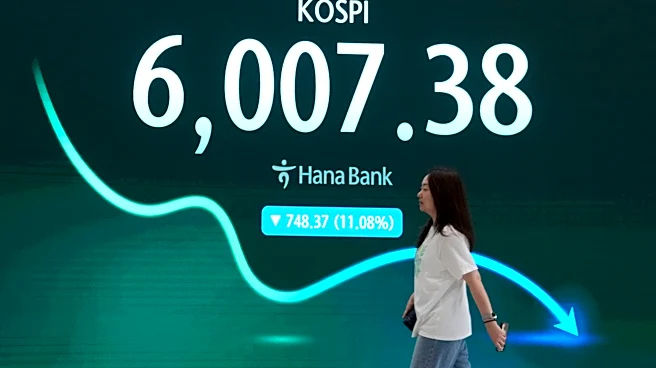
The semiconductor sector is experiencing significant pressure as investors question the sustainability of the AI spending boom and express concerns over rising competition from China. The KOSPI index recently saw a nearly 11% drop, marking its worst session
in months, with major players like Samsung Electronics and SK Hynix suffering substantial declines. Despite these challenges, the broader market remains relatively stable, with the Dow Jones and S&P 500 indices holding near record highs. Analysts attribute this resilience to the rotational nature of the market, where sectors like financials and industrials continue to perform well despite the tech sector's struggles.
Why It's Important?
The current situation in the semiconductor market underscores the volatility and uncertainty surrounding AI investments. As investors reassess the value of tech stocks, there is a potential for broader economic implications, particularly if the decline in chip stocks begins to affect other sectors. The stability of major indices suggests that the market is not yet in a correction phase, but continued pressure on tech stocks could change this outlook. The situation also highlights the growing influence of Chinese companies in the semiconductor industry, which could reshape competitive dynamics and impact global supply chains.
What's Next?
Investors and market analysts will be closely monitoring the semiconductor sector for signs of stabilization or further decline. The response of major tech companies to these challenges, particularly in terms of managing AI-related expenditures and addressing competitive threats, will be critical. Additionally, any policy changes or economic developments in China could further influence market dynamics. The broader market will also be watching for potential shifts in investor sentiment that could lead to more significant market corrections.