





What's Happening?
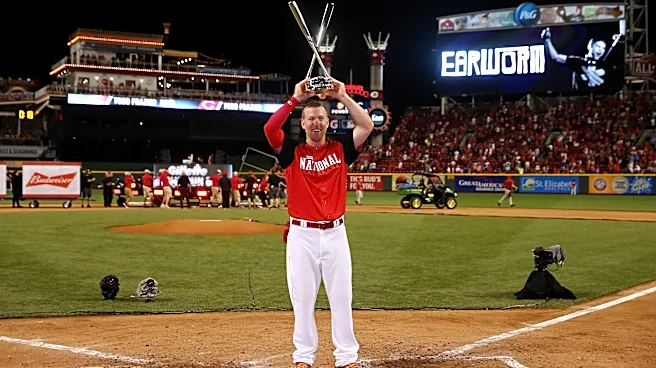
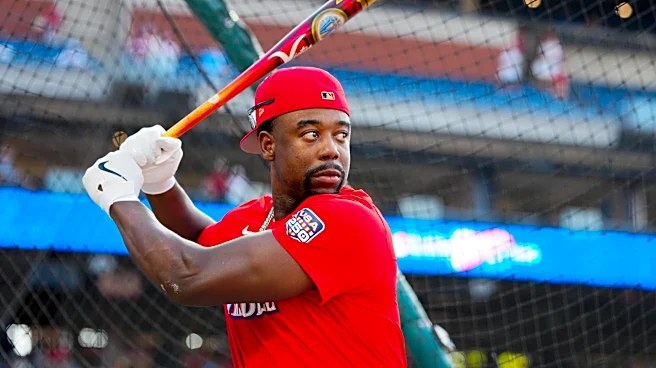
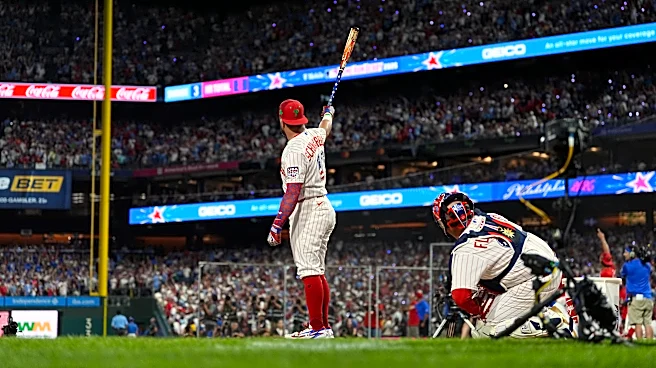
The 2026 MLB Home Run Derby, set to take place in Philadelphia, will feature a significant change in its format, focusing more on raw power than endurance. Participants will be limited to a specific number of swings—20 in the first round and 15 in the subsequent
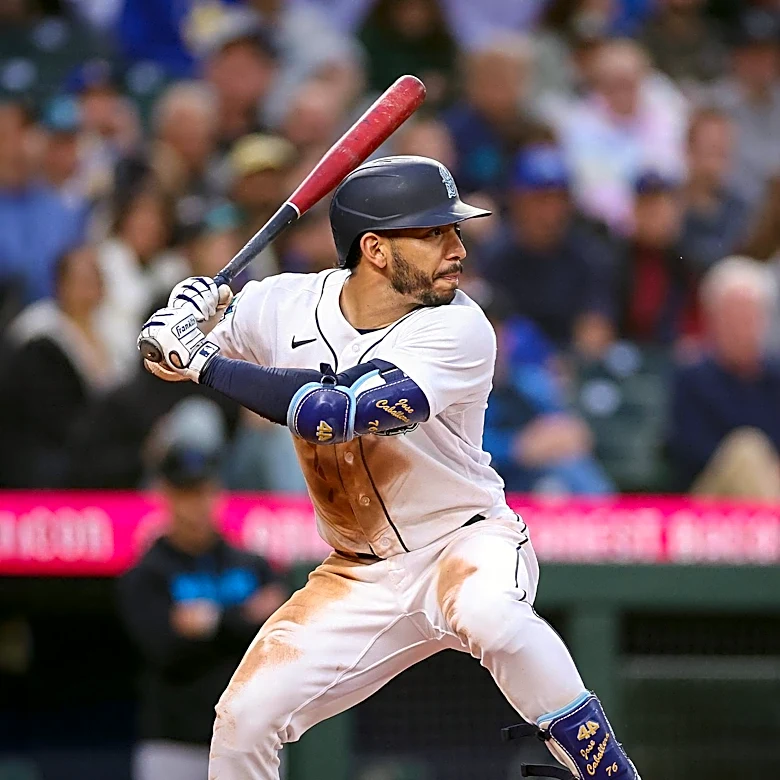
rounds—rather than a set number of 'outs' or non-home run hits. This change is expected to reduce the workload on hitters, as they will no longer be required to hit 30 or 40 home runs in a single round. The new rules aim to highlight the raw power of the participants, with bat speed and exit velocity (EV90) being key metrics. Junior Caminero, known for his fast bat, is considered a favorite, despite Kyle Schwarber leading the league in home runs.
Why It's Important?
The new rules in the Home Run Derby could shift the focus of the event, potentially leading to more exciting and competitive finals. By emphasizing raw power, the Derby may better align with its intended celebration of hitting prowess. This change could also influence how players prepare for the event, prioritizing power metrics over endurance. The format adjustment might attract more viewers and increase engagement, as fans could witness more dramatic and powerful home runs. Additionally, the new rules could impact player selection and strategy, with teams possibly favoring players with higher bat speeds and exit velocities.
What's Next?
As the Derby unfolds under the new rules, it will be interesting to see how players adapt their strategies. The focus on raw power may lead to different training regimens and preparation techniques. Observers will be keen to see if the changes result in more thrilling and competitive rounds, particularly in the finals. The performance of players like Junior Caminero and Kyle Schwarber will be closely watched to assess the impact of the new format. The outcome of this year's Derby could influence future iterations, potentially solidifying the emphasis on power metrics in the event's structure.