





What's Happening?
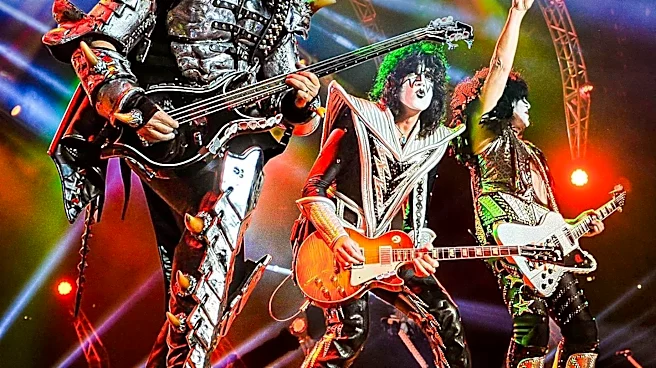
On October 11, 1983, the iconic rock band KISS performed without their signature face paint for the first time during the opening show of their 'Lick It Up Tour' in Cascais Hall, Lisbon, Portugal. This marked a significant strategic move to revitalize
the band's image. While this was their first public concert without makeup, an earlier makeup-free appearance had occurred on September 18 during an MTV special. This decision aimed to present a new era for the band, moving away from the theatrical personas that had defined their early career. The band members, including Gene Simmons and Paul Stanley, appeared as themselves, signaling a shift in their artistic direction and public presentation. This event is noted as a key moment in rock history, reflecting the band's efforts to adapt and maintain relevance in a changing music landscape.
Why It's Important?
This event is important because it represents a pivotal moment in the history of KISS and the broader rock music industry. For KISS, shedding their iconic makeup was a bold attempt to re-engage with their audience and attract new fans, demonstrating a willingness to evolve beyond their established image. The face paint had been central to their brand identity, making this a high-stakes decision that could have alienated their loyal fanbase or opened new avenues for success. In the context of rock history, it highlights the pressures bands face to reinvent themselves and stay current. It also underscores the power of visual branding in music and the impact of such changes on a band's legacy and commercial viability. The move aimed to prove that their music, not just their theatrics, was the core of their appeal.
What's Next?
Following this initial makeup-free performance, KISS continued their 'Lick It Up Tour' and subsequent albums without the face paint for several years. This period saw the band explore different musical styles and solidify their identity as a hard rock act beyond the shock rock theatrics. The decision to remove the makeup led to a new chapter for the band, influencing their songwriting, stage presence, and overall public perception. While they eventually returned to their iconic makeup in the late 1990s, the 1983 event set a precedent for their adaptability and willingness to experiment with their image. The long-term impact included a diversification of their fanbase and a demonstration of their musical versatility, proving they could succeed with or without their famous personas.
Beyond the Headlines
The decision by KISS to perform without makeup delves into deeper themes of artistic identity, authenticity, and commercial strategy in the music industry. For years, their makeup was an integral part of their mystique, creating larger-than-life characters that resonated with fans. Removing it challenged the very foundation of their public image, raising questions about whether the band's essence lay in their music or their theatrical presentation. This move can be seen as an attempt to assert their musical credibility and artistic maturity, moving beyond the 'gimmick' perception. It also reflects the constant tension between artistic expression and market demands, as bands often grapple with how to evolve while retaining their core identity and fan base. The event serves as a case study in brand management within the entertainment world, illustrating the risks and potential rewards of radical image overhauls.