






What's Happening?
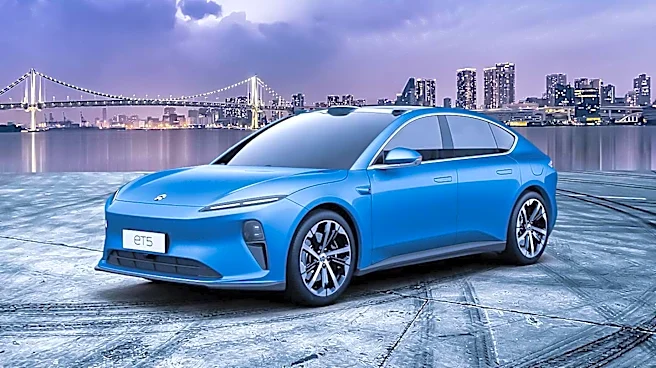
U.S.-listed shares of Nio, Inc. (NIO) experienced a premarket slide of over 2% as the Chinese electric vehicle (EV) maker's expansion efforts in Europe lost momentum. The company is facing significant challenges, including shrinking inventory and a steep
decline in vehicle registrations in key European markets such as Germany and the Netherlands. Nio's websites in Germany, the Netherlands, and Sweden collectively show only 15 vehicle configurations available, with none immediately available in the Netherlands. German registrations for Nio vehicles plunged 89% to 18 through July, while Dutch registrations fell 88% to eight. This marks a fourth consecutive monthly decline for Nio's U.S.-listed shares, which have fallen 5% this month.
Why It's Important?
Nio's struggles in the European market highlight the significant hurdles faced by Chinese EV manufacturers attempting to expand globally, particularly in competitive and regulated markets. The decline in sales and inventory shortages indicate potential issues with logistics, production, or market acceptance. For the U.S. market, Nio's performance can influence investor sentiment towards other international EV companies and the broader EV sector. A slowdown in Nio's global growth could impact its financial stability and its ability to compete with established players and other emerging EV brands. The challenges also underscore the complexities of international market entry, including navigating tariffs, consumer preferences, and regulatory environments, which can affect the global competitiveness of EV manufacturers.
What's Next?
Nio's current European vehicles are built on its older NT 2.0 platform, and newer models sold in China have not yet been announced for Europe. The company has reportedly informed European owners that model updates will not arrive until late 2027. To clear older stock, Nio has resorted to zero-percent financing and price cuts of up to 37% in Germany. The company has also closed four European locations in nine months, including its flagship Hamburg showroom, and shifted its Denmark operations from direct sales to a distributor-led model. Despite these setbacks, Nio maintains its commitment to the European region, with Nio Norway General Manager An Ho stating that Europe remains a central part of Nio's global commitment. The company will need to address its inventory issues and accelerate the introduction of newer models to regain traction in the European market.
Beyond the Headlines
Nio's difficulties in Europe could signal broader challenges for Chinese EV brands seeking to establish a strong foothold in Western markets. The imposition of a combined 30.7% tariff on Nio's China-built EVs in EU markets, unlike in Norway, highlights the impact of trade policies on market access and competitiveness. This situation could lead to increased scrutiny of the origin and manufacturing processes of EVs sold in Europe and the U.S. It also raises questions about the long-term viability of direct sales models versus distributor-led approaches in diverse international markets. The need for significant price cuts and the closure of showrooms suggest that Nio's initial European strategy may have underestimated market dynamics and consumer expectations, prompting a re-evaluation of its global expansion strategy and potentially influencing other EV manufacturers' approaches to international growth.