







What's Happening?
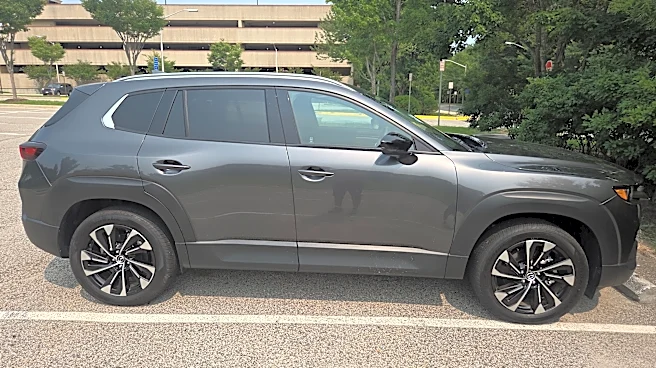
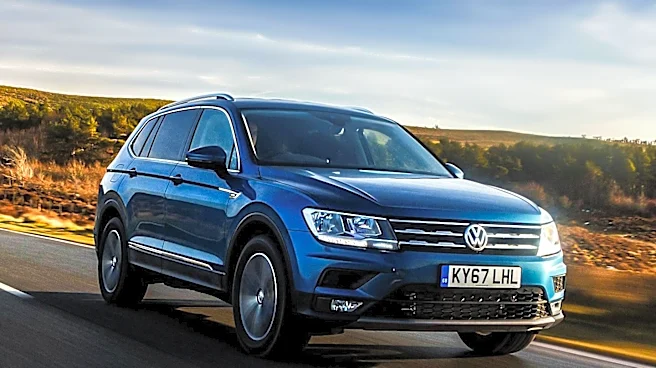
The 2026 Mazda CX-5 and Volkswagen Tiguan are being compared as alternatives to the more common Honda CR-V and Toyota RAV4 in the compact SUV market. Both vehicles offer unique features and appeal to driving enthusiasts. The Mazda CX-5, in its Premium
Plus trim, features a 187-hp naturally aspirated engine, while the VW Tiguan SEL R-Line Turbo boasts a 268-hp turbocharged engine. The Tiguan is noted for its powerful engine and luxurious interior, while the CX-5 is praised for its ride quality and spacious rear seat. Despite the CX-5's attractive styling, the Tiguan's performance and interior quality give it an edge in this comparison.
Why It's Important?
This comparison highlights the competitive nature of the compact SUV market, where manufacturers strive to balance performance, comfort, and affordability. The Mazda CX-5 and VW Tiguan cater to consumers seeking alternatives to mainstream models, offering distinct driving experiences and features. The outcome of such comparisons can influence consumer preferences and impact sales in this segment. As automakers continue to innovate, the emphasis on engine performance, interior quality, and technological features will play a crucial role in shaping the future of compact SUVs.
What's Next?
As the automotive industry evolves, both Mazda and Volkswagen may continue to refine their offerings to meet consumer demands for efficiency and performance. The introduction of hybrid or electric variants could further enhance their appeal. Additionally, advancements in technology and safety features are likely to become standard, influencing future comparisons and consumer choices. The competitive landscape will push manufacturers to innovate and differentiate their models to capture market share in the growing compact SUV segment.