



What's Happening?
Russian Central Bank Governor Elvira Nabiullina has stated that there should be no rush to lower the key interest rate, warning that such a move could harm the economy. Speaking in the State Duma, Nabiullina emphasized that rapidly rising prices represent
the most unfair form of taxation, disproportionately affecting vulnerable populations. She noted that while the period of tight monetary policy is a necessary step towards achieving low inflation and moderate interest rates, there are currently no signs of the economy overcooling. Nabiullina indicated that the key rate is projected to remain in the double-digit range throughout 2027 in the regulator's baseline scenario, though it is expected to decline. She also highlighted that a faster growth in the supply of goods and services would allow for a more rapid reduction of the key rate. The labor market, despite some easing, continues to face shortages, which acts as a physical constraint on increasing production.
Why It's Important?
This stance from the Russian Central Bank Governor signals a cautious approach to monetary policy, prioritizing inflation control over immediate economic stimulus. For U.S. businesses and investors with exposure to Russian markets, this indicates a prolonged period of higher borrowing costs and potentially slower economic growth within Russia. The emphasis on controlling inflation, which Nabiullina describes as the 'most unfair tax,' suggests a commitment to economic stability that could, in the long run, create a more predictable environment. However, the immediate impact of a high key rate could deter foreign investment and limit the expansion of U.S. companies operating in or trading with Russia. The persistent labor shortage also points to structural challenges within the Russian economy that could affect productivity and supply chains, indirectly influencing global markets and U.S. economic interests through commodity prices or trade dynamics.
What's Next?
The Russian Central Bank's key rate is expected to remain in double digits throughout 2027, with potential reductions only occurring as economic capacity recovers and inflationary pressures subside. Businesses and consumers in Russia will likely continue to face high borrowing costs, impacting investment and spending decisions. The government may focus on initiatives to boost the supply of goods and services and address labor shortages to create conditions for future rate cuts. International observers and U.S. policymakers will be watching for any shifts in Russia's economic indicators, particularly inflation rates and GDP growth, as these could influence broader geopolitical and economic strategies. The ongoing tight monetary policy could also affect Russia's ability to fund its various domestic and international endeavors, potentially having ripple effects on global stability.
Beyond the Headlines
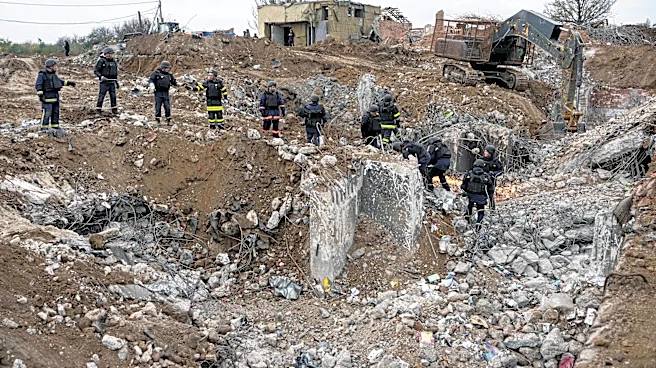
The Central Bank's decision reflects a broader challenge faced by many economies: balancing inflation control with economic growth. Nabiullina's strong rhetoric against inflation as an 'unfair tax' underscores the social and political implications of rising prices, particularly in a country like Russia where economic stability can be a key factor in public sentiment. The mention of 'attacks on our oil refineries, other industrial facilities, data centers, and logistics hubs' as factors constraining production capacity hints at the geopolitical context influencing economic policy. This suggests that external pressures and internal vulnerabilities are deeply intertwined with monetary decisions. The long-term implications could include a re-evaluation of Russia's economic resilience under sustained pressure and its capacity to adapt to both internal and external shocks, potentially leading to shifts in global economic partnerships and trade routes.