



What's Happening?
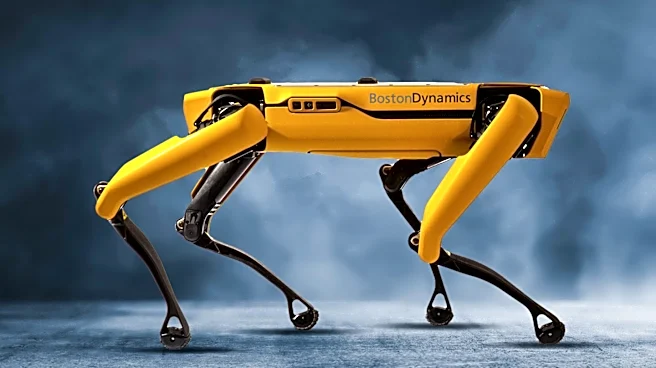
Boston Dynamics has released Spot 5.2, a significant software update for its quadruped robot, Spot. This update aims to integrate Spot more deeply with enterprise systems and enable AI agents to autonomously trigger inspections and other actions within
industrial facilities. Key enhancements include new predictive maintenance capabilities such as gas sensing, visual vibration analysis, and partial discharge detection. The update also expands Spot's visual inspection abilities through Google Gemini-powered visual intelligence and introduces Site Scans for continuous facility monitoring. Boston Dynamics' Orbit software has been redesigned to focus on industrial assets, allowing for the import of asset hierarchies and metadata, and linking assets to Spot's inspections. Furthermore, Orbit's expanded API capabilities enable external data sources, like fixed sensors and security cameras, to trigger Spot's deployment, moving towards a system where AI agents can autonomously dispatch the robot based on predefined business conditions. This initiative seeks to connect disparate AI and automation systems, allowing information from various parts of an industrial facility to initiate actions by Spot.
Why It's Important?
This advancement is crucial for U.S. industries, particularly manufacturing, energy, and logistics, as it significantly enhances operational efficiency and safety. By integrating advanced predictive maintenance features, companies can anticipate equipment failures, reduce unplanned downtime, and optimize maintenance schedules, leading to substantial cost savings and increased productivity. The ability for AI agents to autonomously dispatch Spot based on real-time data transforms reactive maintenance into proactive asset management. This shift minimizes human exposure to hazardous environments, improving worker safety in industrial settings. The deeper integration with enterprise systems means that data collected by Spot can be seamlessly incorporated into existing management platforms, providing a holistic view of asset health and operational performance. This technological leap supports the broader trend of Industry 4.0, where interconnected systems and intelligent automation drive decision-making and operational excellence, giving U.S. companies a competitive edge in global markets by fostering more resilient and efficient industrial operations.
What's Next?
The immediate next steps involve the adoption and implementation of Spot 5.2 by industrial clients across various sectors. Companies will likely begin integrating the enhanced Spot robots into their existing operational frameworks, leveraging the new predictive maintenance and AI-driven inspection capabilities. This will involve configuring Orbit software to align with their specific asset hierarchies and operational needs, as well as establishing protocols for AI agent-triggered deployments. Boston Dynamics is expected to continue refining these features based on user feedback and real-world performance data. The expanded API capabilities suggest a future where Spot can interact with an even wider array of industrial sensors and AI systems, potentially leading to more complex autonomous workflows. Furthermore, the success of these integrations could drive further innovation in robotic autonomy and AI-powered decision-making in industrial environments, pushing the boundaries of what mobile robots can achieve in terms of monitoring, inspection, and maintenance tasks.
Beyond the Headlines
The deeper implications of Spot 5.2 extend to the evolving relationship between human workers and advanced robotics in industrial settings. While the immediate benefit is enhanced efficiency and safety, the increasing autonomy of robots like Spot, driven by AI agents, raises questions about workforce adaptation and the need for new skill sets. Workers may transition from manual inspection and reactive maintenance roles to overseeing robotic fleets, analyzing AI-generated insights, and managing complex automated systems. This shift necessitates significant investment in training and upskilling programs to ensure the human workforce can effectively collaborate with intelligent machines. Ethically, the deployment of autonomous robots in sensitive industrial areas will require robust frameworks for accountability and decision-making, especially in scenarios involving potential risks. Culturally, the widespread adoption of such advanced robotics could redefine industrial work, emphasizing data-driven insights and technological proficiency, ultimately shaping the future of labor in the U.S. industrial landscape.