






What's Happening?
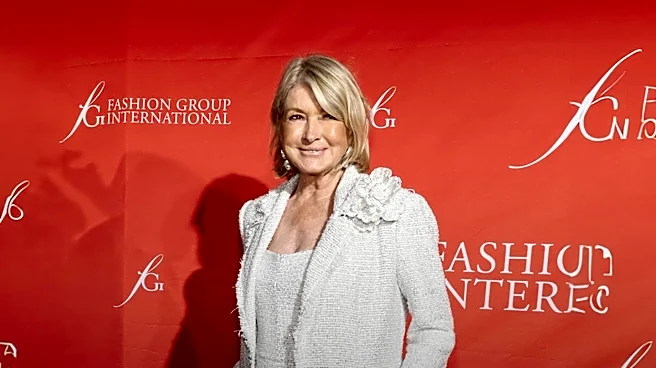
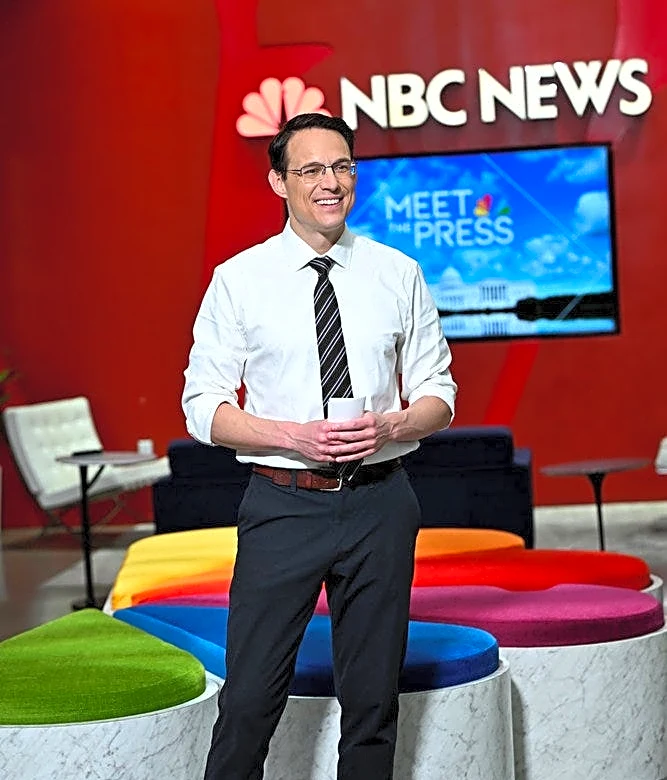
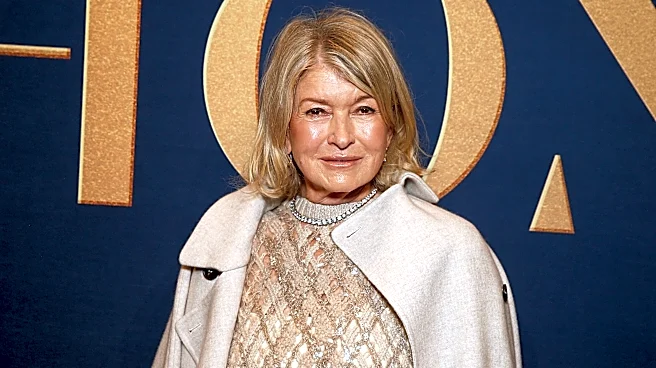
Martha Stewart has offered a new explanation for her widely criticized Halloween costume, stating that a chocolate spill by 'Today' show host Craig Melvin led to her last-minute choice. Stewart appeared on the 'Today' show in a white American flag sweater
and Olympic cap, where Melvin, dressed as Snoop Dogg, accidentally spilled chocolate ganache on her sweater during a cooking segment. According to Stewart, this incident rendered her planned outfit unusable for a Halloween party she was attending later that day. With only ten minutes to get ready, she opted for what she described as an 'easy' costume, dressing as a 'bum' and holding a sign that read, 'I’m hungry, help me!!' This costume, which she initially claimed was meant to raise awareness about homelessness, drew significant backlash for being insensitive. Stewart later issued an apology for the costume, acknowledging it was 'insensitive and not funny,' but has now shifted the blame for the costume's origin to the on-air mishap.
Why It's Important?
This incident highlights the ongoing scrutiny public figures face regarding their actions and statements, particularly in the age of social media where missteps can quickly escalate into widespread controversy. For Martha Stewart, a lifestyle guru whose brand is built on aspirational living and impeccable taste, the backlash over her costume and subsequent shifting explanations could impact public perception and brand image. The situation also underscores the delicate balance celebrities must maintain between personal expression and public responsibility, especially when addressing sensitive social issues like homelessness. The immediate and strong negative reaction from the public demonstrates a low tolerance for perceived insensitivity, particularly from wealthy individuals. This event serves as a reminder of the potential for reputational damage when public figures are perceived as out of touch or dismissive of serious societal problems, regardless of their stated intentions or subsequent justifications.
What's Next?
Following Martha Stewart's latest explanation, public reaction will likely continue to be divided. Some may view her new account as an attempt to deflect responsibility, while others might accept it as a plausible, albeit unfortunate, chain of events. It remains to be seen if Craig Melvin or the 'Today' show will issue any public statement regarding Stewart's claims, which could further shape the narrative. Stewart may face continued scrutiny on social media and in entertainment news outlets, potentially leading to further discussions about celebrity accountability and the appropriateness of certain public displays. The incident could also prompt other public figures to exercise greater caution and sensitivity in their public appearances and social media content, especially around potentially controversial topics or events like Halloween costumes. The long-term impact on Stewart's brand will depend on how she navigates future public engagements and whether this event is perceived as an isolated misstep or part of a broader pattern.
Beyond the Headlines
Beyond the immediate controversy, this event touches upon broader themes of privilege, perception, and the commodification of social issues. Stewart's initial defense of raising 'awareness' for homelessness, followed by her new explanation, highlights the complex and often fraught relationship between celebrity actions and genuine social advocacy. Critics often argue that such gestures, especially when perceived as trivializing serious issues, can do more harm than good by reducing complex problems to superficial representations. The incident also raises questions about the authenticity of celebrity apologies and the effectiveness of damage control in the digital age. Furthermore, it underscores the persistent challenge for public figures to remain relatable and empathetic to a diverse audience, particularly when their personal wealth and lifestyle create a significant disconnect from the experiences of many. This situation serves as a case study in how quickly public sentiment can turn when actions are perceived as tone-deaf, regardless of the individual's past philanthropic efforts or stated intentions.