




What's Happening?
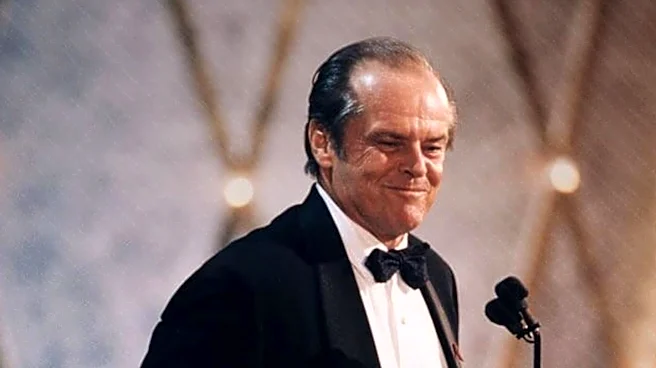
Jack Nicholson, a celebrated actor, turned down several iconic roles throughout his career, including the part of Raymond Babbitt in 'Rain Man' and Michael Corleone in 'The Godfather.' For 'Rain Man,' Nicholson was among several actors, including Mel
Gibson and Bill Murray, who declined the role before it ultimately went to Dustin Hoffman. This occurred after Steven Spielberg, initially slated to direct, had scheduling conflicts. In the case of 'The Godfather,' Nicholson was offered the role of Michael Corleone by the studio, which lacked faith in Al Pacino and director Francis Ford Coppola. However, Nicholson declined the part, stating his belief that an Italian American actor should play the role. This decision ultimately allowed Al Pacino to secure the role after significant internal studio conflict. Other notable roles Nicholson passed on include Roy Neary in 'Close Encounters of the Third Kind' and Benjamin L. Willard in 'Apocalypse Now.'
Why It's Important?
Jack Nicholson's decisions to decline these pivotal roles highlight the complex interplay of artistic vision, personal conviction, and industry dynamics in Hollywood. His refusal of the Michael Corleone role, specifically due to his belief that an Italian American actor should portray the character, underscores a significant ethical stance on representation in film. This decision, made decades ago, resonates with contemporary discussions about authentic casting and cultural sensitivity in storytelling. Had Nicholson accepted these roles, the cinematic landscape of these iconic films, and potentially the careers of actors like Dustin Hoffman and Al Pacino, could have been drastically different. It also illustrates how an actor's choices, even those to decline a part, can profoundly shape film history and influence the cultural impact of major productions. These instances reveal the behind-the-scenes struggles and artistic integrity that often define the creation of cinematic masterpieces.
What's Next?
The historical context of actors declining major roles continues to influence casting decisions and industry discussions today. Nicholson's rationale for turning down Michael Corleone, emphasizing ethnic authenticity, foreshadowed later movements for more representative casting. This precedent encourages ongoing conversations about who is best suited to tell certain stories and portray specific characters, particularly concerning cultural and ethnic backgrounds. While Nicholson's career was not hindered by these choices, the narrative of 'what if' remains a fascinating aspect of film history, prompting audiences and critics to consider alternative cinematic realities. Future analyses of film history and actor legacies will likely continue to reference these decisions as examples of pivotal moments that shaped the trajectory of Hollywood's most celebrated works and performers. The impact of such choices reinforces the idea that an actor's influence extends beyond their performances to their ethical and artistic stances.
Beyond the Headlines
The stories of Jack Nicholson declining iconic roles offer a deeper look into the ethical considerations and artistic integrity that can drive an actor's career. His decision regarding Michael Corleone, rooted in a belief in authentic representation, speaks to a broader, evolving consciousness within the entertainment industry about cultural appropriation and the importance of diverse voices. This wasn't merely a career choice but a statement on the responsibility of casting. Such decisions highlight the power actors hold to influence not just the artistic outcome of a film but also its social and cultural resonance. It underscores the idea that sometimes, the most impactful choices are those not taken, shaping legacies and influencing industry standards in subtle yet profound ways. These instances serve as case studies in the ongoing debate about artistic freedom versus social responsibility in Hollywood, demonstrating how individual choices can contribute to long-term shifts in industry practices and cultural values.