



What's Happening?
The Boston Red Sox, after a disappointing start to the 2026 season with a 10-17 record, made a significant managerial change by firing Alex Cora, their former World Series-winning manager. This decision, initially seen as a sign of a faltering season,
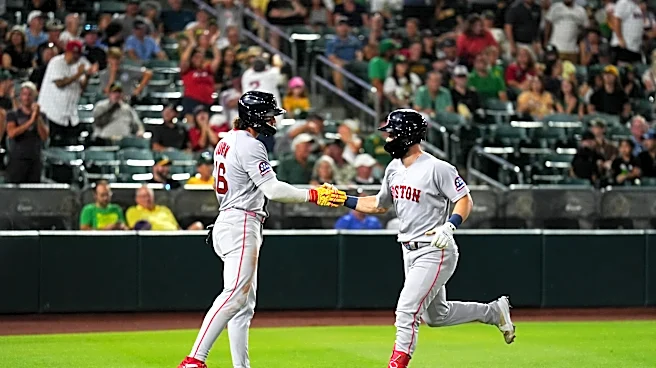
has instead led to a remarkable turnaround. Under interim manager Chad Tracy, promoted from Triple-A Worcester, the team has surged back into playoff contention. The Red Sox have become one of the hottest teams in baseball, achieving a 21-4 record in July and positioning themselves as buyers at the trade deadline. Despite his dismissal, Cora had expressed confidence in the team's potential, predicting a successful run that has since materialized.
Why It's Important?
The Red Sox's turnaround is significant for several reasons. It highlights the impact of managerial changes on team performance and morale. The decision to replace Cora with Tracy has revitalized the team, demonstrating the importance of leadership in sports. This resurgence has implications for the American League playoff race, as the Red Sox now hold the second wild-card berth. The team's success also underscores the depth of talent on the roster, which Cora had confidence in despite his departure. This development could influence future managerial decisions across Major League Baseball, as teams may consider similar changes to spark performance improvements.
What's Next?
As the trade deadline approaches, the Red Sox are expected to be active in the market, seeking to bolster their roster for a playoff push. The team's current momentum suggests they could be formidable contenders in the postseason. The management will need to decide whether to make significant acquisitions or rely on the current roster's chemistry. Additionally, Alex Cora's future remains a topic of interest, as he is anticipated to return to a managerial role in the major leagues next season, potentially influencing team dynamics elsewhere.