


What's Happening?
The global battery market is experiencing a pivotal inflection point, characterized by significant growth projections and increasing complexity. Demand for lithium-ion batteries is forecasted to grow at a Compound Annual Growth Rate (CAGR) of approximately
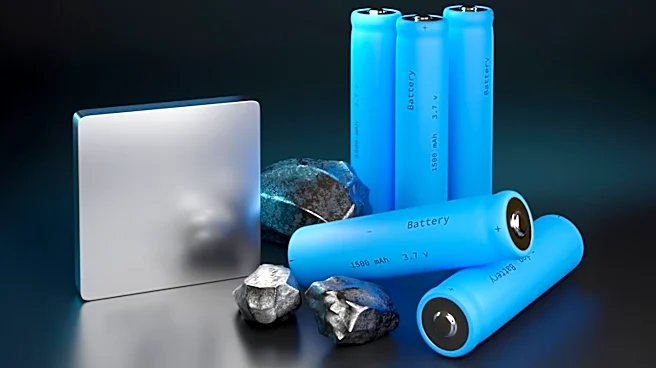
20% through 2032. This growth is primarily driven by the accelerating transition to electric vehicles, the rapid expansion of stationary energy storage systems for grids and data centers, and the electrification of commercial vehicles. The stationary energy storage systems (BESS) segment alone is projected to more than triple in size between 2024 and 2030. However, this opportunity is accompanied by compounding complexities, including rapidly evolving battery architectures such as solid-state cells, sodium-ion chemistries, and next-generation anode materials, which are challenging the dominance of conventional lithium-ion batteries. Despite dramatic price drops over the past decade, cost pressure, raw material volatility, and high scrap rates in cell manufacturing continue to squeeze margins across the value chain.
Why It's Important?
The current state of the battery market holds significant implications for various U.S. industries and economic stakeholders. The rapid growth in demand for batteries, particularly for electric vehicles and energy storage, presents both opportunities and challenges for manufacturers, technology developers, and investors. U.S. companies involved in the electric vehicle sector, renewable energy, and data centers are heavily reliant on battery technology advancements and supply chain stability. The volatility in raw material costs and manufacturing margins could impact the profitability and competitiveness of these industries. Furthermore, the shift towards new battery chemistries and architectures means that companies failing to adapt their strategies and investments could lose market share. Investors and equity markets are recalibrating expectations as the market matures, indicating a need for careful strategic planning and risk management for those involved in the battery sector.
What's Next?
The future of the battery market will be defined by critical decisions made today regarding cell chemistry, pack architecture, safety validation, and supply chain structure. Companies that succeed will likely be those that effectively bridge the gap between strategic intent and engineering execution. This involves making rigorous, evidence-based decisions on battery architecture and cell selection, designing for manufacturability and safety from the outset, and proactively managing supplier and regulatory risks. While breakthroughs in battery technology, such as solid-state batteries, promise significant improvements, their timelines to mass production remain uncertain. Therefore, incremental improvements to existing lithium iron phosphate (LFP) and NMC chemistries are expected to continue delivering meaningful gains in the short to medium term. The most commercially successful battery programs are anticipated to be built on well-understood chemistry, optimized for specific applications, rather than solely focusing on headline-grabbing technologies.
Beyond the Headlines
Beyond the immediate economic and technological shifts, the evolving battery market has deeper implications for global sustainability and energy independence. The push for electric vehicles and renewable energy storage is central to addressing climate change and reducing reliance on fossil fuels. However, the complexities of raw material sourcing, ethical mining practices, and battery recycling present significant environmental and social challenges. The high scrap rates in cell manufacturing also highlight the need for more efficient production processes and robust recycling infrastructure to minimize waste and maximize resource utilization. The competition among different battery chemistries and the race for technological superiority could also lead to geopolitical considerations, as nations vie for dominance in this critical sector. The long-term success of the energy transition hinges on not only technological innovation but also on sustainable and ethical supply chains and manufacturing practices.