



What's Happening?
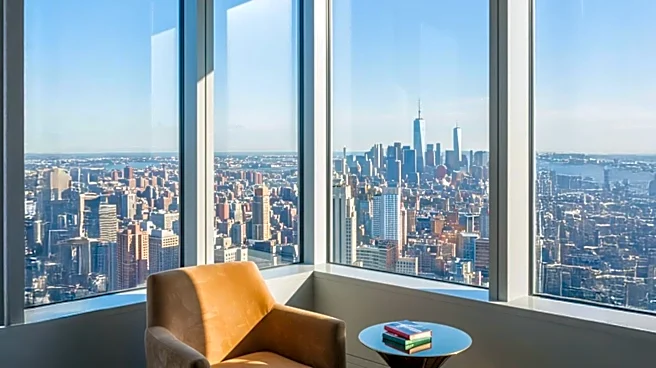
The Manhattan ultra-luxury real estate market, specifically properties priced at $10 million and above, is experiencing a significant surge in activity, marking its second-best year in two decades, according to Olshan Realty. Last week alone, trophy properties accounted
for half of all contracts signed. As of November 22, 294 contracts for properties valued at $10 million or more have been signed in 2026, approaching the 2021 peak of 400. The average asking price for these properties last week was $10.5 million, with an average discount of only 5%. This robust performance is attributed to tight inventory, leading to bidding wars, and an intensely competitive rental market where rents have doubled or tripled in recent years. For instance, a three-bedroom-plus apartment in Manhattan has a median monthly rent of $5,375, a 35.6% increase over the past seven years, requiring a household income of $215,000 annually to afford it.
Why It's Important?
The booming ultra-luxury market in Manhattan highlights a significant divergence within the broader U.S. real estate landscape. While many segments of the housing market face challenges due to high mortgage rates and affordability issues, the high-end sector, largely driven by cash-flush buyers, remains resilient. This trend indicates that a segment of the population is less affected by rising interest rates, as some buyers prefer a 7% mortgage rate over liquidating more lucrative investments. The intense competition and bidding wars in this market segment underscore the continued desirability of Manhattan as a destination for wealthy individuals, despite factors like the pied-à-terre tax and stock market corrections. This sustained demand for high-value properties can influence property valuations across the city and potentially attract further investment into luxury developments, impacting urban planning and the availability of high-end housing.
What's Next?
The current momentum in Manhattan's ultra-luxury market is expected to continue, driven by persistent low inventory and strong demand from affluent buyers. However, future changes, such as the anticipated ramp-up of the pied-à-terre surcharge in 2029, which will replace Department of Finance valuations with significantly higher 'fair market' valuations, could introduce new dynamics. This policy shift might influence investment decisions and potentially alter the attractiveness of ultra-luxury properties for some buyers. Real estate professionals are closely monitoring these regulatory changes, as they could impact the market's trajectory in the coming years. The ongoing high rental costs in Manhattan may also continue to push some high-income renters towards purchasing, further fueling demand in the luxury sales market.
Beyond the Headlines
The sustained strength of Manhattan's ultra-luxury real estate market, amidst broader economic uncertainties and housing affordability crises, points to deeper societal and economic implications. It underscores a growing wealth disparity, where a segment of the population can readily absorb high property costs and even engage in bidding wars, while others struggle with basic housing affordability. The market's resilience also highlights the enduring appeal of New York City as a global hub for wealth and investment, suggesting that its status as a prime location for high-net-worth individuals remains largely unshaken by external economic pressures. This trend could further entrench the city's reputation as a luxury market, potentially influencing urban development priorities and the allocation of resources towards high-end amenities and services, rather than addressing broader housing needs.