






What's Happening?
Okta (OKTA) stock is currently trading 29.3% below its highest close recorded in February 2021. The company, which specializes in 'workforce identity and customer identity platforms,' has experienced considerable stock market volatility since its initial
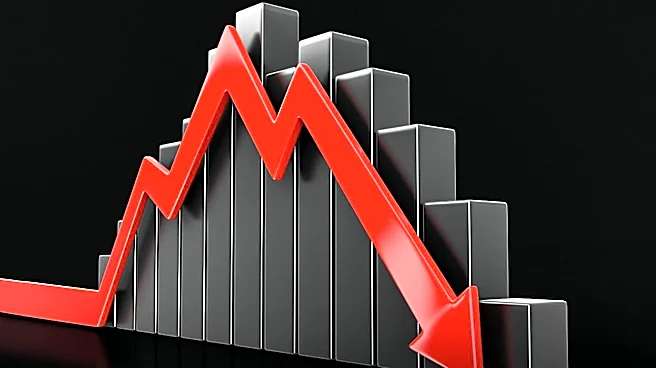
public offering. Since April 2017, an initial investment of $10,000 in Okta would have grown to $87,741 by Monday, significantly outperforming the S&P 500's growth to $30,724 over the same period. However, Okta's stock has seen three instances where it fell 20% or more from a new high. The most severe decline occurred between February 2021 and November 2022, when the stock plummeted 84.6%, while the S&P 500 only lost 4.2% during that time. As of November 2026, Okta has not yet recovered to its February 2021 peak.
Why It's Important?
The performance of Okta's stock highlights the inherent risks and potential rewards associated with investing in high-growth technology companies. While early investors saw substantial returns, the significant drawdowns demonstrate the challenges of holding such volatile assets, especially for those who rely on income from savings, as Okta does not issue regular cash payouts. The company's business model, focused on identity and access management software, is critical in the evolving landscape of cybersecurity. Despite widening operating losses in its deepest fall, with sales rising 107.3% between the high and low, the underlying demand for its services remains strong. The stock's inability to surpass its 2021 high, even after a 358.2% rebound from its November 2022 low, indicates a prolonged period of investor uncertainty and a re-evaluation of its valuation.
What's Next?
Okta's stock performance will likely continue to be scrutinized by investors, particularly regarding its ability to regain its previous highs. The company's focus on 'workforce identity and customer identity platforms' positions it within a growing market, but its financial metrics, such as operating losses, will be key indicators for future growth and profitability. Investors will be watching for signs of sustained profitability and a reduction in operating losses relative to sales. The long wait for the stock to return to its 2021 high suggests that future growth may be more tempered, and investors may prioritize companies with more stable returns or dividend payouts, especially those seeking income from their investments.
Beyond the Headlines
The trajectory of Okta's stock reflects broader trends in the technology sector, where rapid growth can be accompanied by extreme volatility. The company's acquisition of another firm in mid-2021 contributed to its sales growth but also coincided with widening losses, illustrating the complexities of integrating acquisitions and managing profitability in a competitive market. The experience of Okta's shareholders underscores the psychological and financial challenges of enduring prolonged stock market downturns, even for companies with strong underlying business models. This situation also highlights the importance of diversification and long-term investment strategies, as opposed to short-term speculation, in navigating the tech market's inherent fluctuations.