


What's Happening?
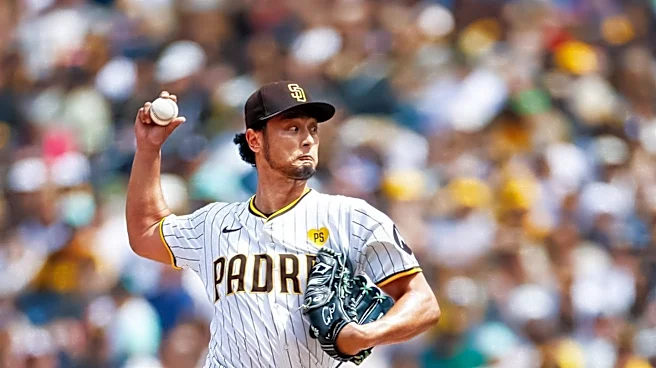
Troy Aikman, former NFL quarterback and current ESPN commentator, has revealed the reasons behind selling his minority stake in the San Diego Padres. Aikman was part of an ownership group that acquired a 35% stake in the Padres in 2009, which later increased
to 49%. The group, led by former Arizona Diamondbacks CEO Jeff Moorad, intended to purchase the team from John Moores for approximately $500 million. However, MLB owners did not approve Moorad as the managing general partner, leading to the collapse of the sale. Consequently, Moores sold the team in 2012 to a group led by Ron Fowler. The Padres have since increased in value significantly, becoming a major contender in the National League. In 2026, the team was sold to private equity billionaire José E. Feliciano and his wife, Kwanza Jones, for a record-breaking $3.9 billion.
Why It's Important?
The sale of the San Diego Padres for $3.9 billion marks a significant milestone in Major League Baseball, surpassing the previous record set by Steve Cohen's purchase of the New York Mets for $2.4 billion in 2020. This transaction highlights the growing financial value and marketability of MLB teams, driven by strategic investments in player contracts and team performance. The Padres' rise in value reflects broader trends in sports franchise valuations, where successful team management and competitive performance can lead to substantial financial returns. This sale underscores the increasing interest from private equity in sports franchises, which could influence future ownership structures and investment strategies in professional sports.
What's Next?
Following the sale, the new ownership under José E. Feliciano and Kwanza Jones is expected to continue the Padres' competitive trajectory. The team's recent success, including playoff appearances and high-profile player acquisitions, suggests a focus on maintaining and enhancing team performance. The sale may also prompt other MLB teams to evaluate their market value and consider potential sales or restructuring. Additionally, the involvement of private equity in sports franchises could lead to changes in how teams are managed and financed, potentially impacting player contracts, team operations, and fan engagement strategies.