








What's Happening?
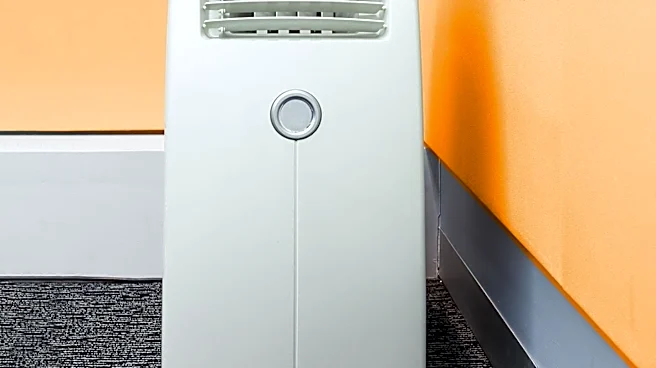
Portable air conditioners often have two BTU ratings, which can be confusing for consumers. The American Society of Heating, Refrigerating and Air-Conditioning Engineers (ASHRAE) provides one rating, while the Department of Energy (DOE) offers another.
The DOE's rating, introduced in 2017, accounts for real-world inefficiencies and provides a more accurate measure of cooling performance. Portable units, unlike window units, are entirely inside the home and vent heat outside, which can reduce efficiency. The DOE's rating reflects this by being 25% to 40% lower than the ASHRAE rating. Choosing the right BTU rating depends on the space to be cooled, with factors like room size, sun exposure, and insulation playing a role.
Why It's Important?
Understanding BTU ratings is crucial for consumers to make informed decisions about air conditioning purchases. The DOE's intervention to provide a more accurate rating system highlights the importance of transparency in product specifications. Accurate BTU ratings help consumers select units that are appropriately sized for their needs, preventing energy waste and reducing costs. This development also emphasizes the role of regulatory bodies in ensuring that product information reflects real-world performance, which can lead to more energy-efficient consumer choices and potentially lower environmental impact.