


What's Happening?
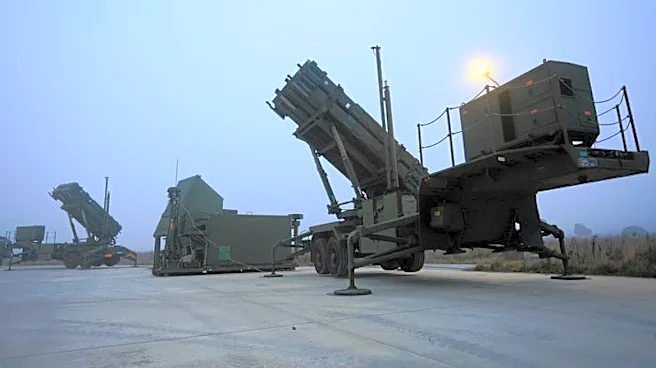
Rheinmetall, in collaboration with Lockheed Martin, is working to increase production of Army Tactical Missile Systems (ATACMS) to address depleted U.S. missile stockpiles. The depletion is a result of the ongoing conflict with Iran, which has significantly
reduced the U.S. Army's global stockpile of long-range precision missiles. Rheinmetall's CEO, Armin Papperger, stated that while the production facilities are expected to be set up next year, it will take more than two years to fully replenish the stockpiles. The joint venture, which still requires approval, has the backing of the U.S. government and aims to target the global market for ATACMS missiles. Rheinmetall has been expanding its production capacity through partnerships and acquisitions to meet the growing demand for military equipment amid conflicts in Ukraine and the Middle East.
Why It's Important?
The replenishment of U.S. missile stockpiles is crucial for maintaining military readiness in the face of ongoing and potential future conflicts. The collaboration between Rheinmetall and Lockheed Martin highlights the increasing demand for military equipment as global tensions rise. The U.S. government's support for this joint venture underscores the strategic importance of ensuring a steady supply of precision missiles. This development also reflects the broader trend of increased defense spending in Europe, as countries seek to bolster their military capabilities in response to regional conflicts. The successful expansion of missile production could have significant implications for the defense industry, potentially leading to increased revenue and job creation.
What's Next?
The joint venture between Rheinmetall and Lockheed Martin is expected to generate its first revenue in 2028. As production facilities are established, the focus will be on meeting the approval requirements and expanding production capacity. The U.S. government and defense companies will likely continue to monitor the situation closely to ensure that military readiness is maintained. Additionally, the ongoing conflicts in Ukraine and the Middle East may drive further demand for military equipment, prompting other defense companies to increase their production capabilities. The outcome of this joint venture could influence future collaborations and investments in the defense sector.